Wednesday, September 28, 2016

An 'Adventure' For Kids And Maybe For Their Parents, Too

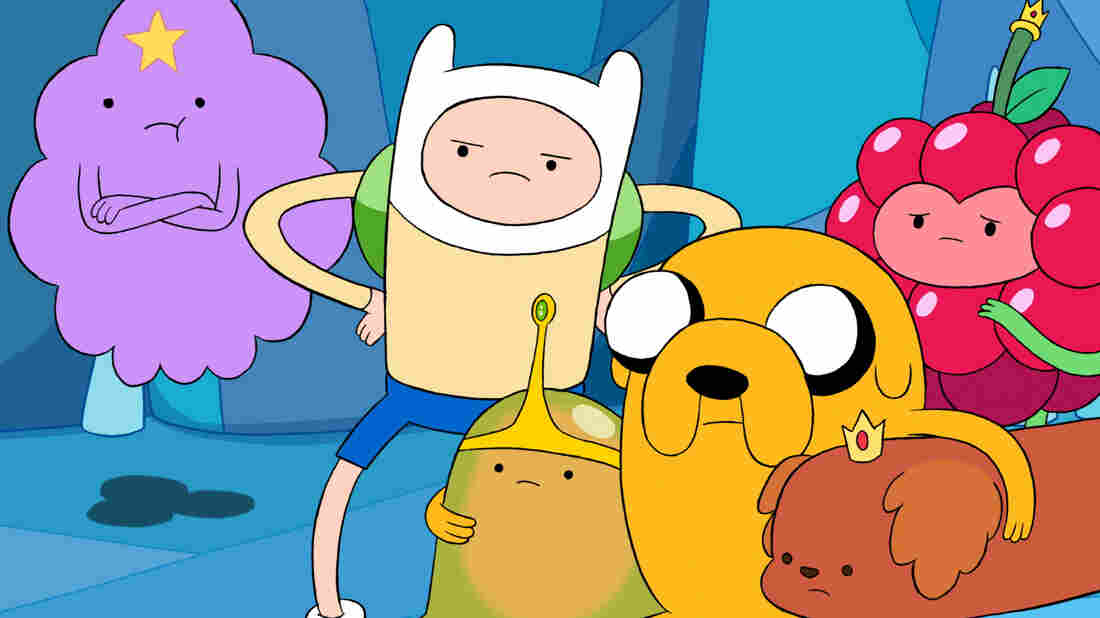
Finn is in the middle, with the skinny arms. Jake is the dog. Together, they have Adventure Time. Cartoon Network hide caption

toggle caption
Cartoon Network

Finn is in the middle, with the skinny arms. Jake is the dog. Together, they have Adventure Time.

Cartoon Network

Count plenty of grown-ups among the millions of fans of Adventure Time, a kids' show on Cartoon Network. Some are surely Emmy voters. (It's won three.) Others are very possibly stoners. Still others are intellectuals. Lev Grossman falls in the last category. He wrote two best-selling novels, The Magicians and The Magician King, and he's Time's senior book critic.

Grossman's critique of Adventure Time? "It's soooo smart! It's sooo intelligent!"

Hang on. He's just getting started.

"I am a little bit obsessed with it," Grossman continues. "It's rich and complicated the way Balzac's work is, which is a funny thing to say about a cartoon."

For the uninitiated, Adventure Time is set in a surreally pastel post-apocalyptic kingdom crawling with mutated candy creatures, bizarre princesses — think Slime Princess and Lumpy Space Princess — and our two heroes. They're Finn and Jake, a gangly human boy and his moon-eyed yellow dog.

The show's creator, Pendleton Ward, modeled Jake partly after Bill Murray's sardonic camp counselor in the 1979 movie Meatballs, a cooler-than-cool older-brother figure who can laugh at his charges without being mean and whose teachable moments are anything but cloying.

"Jake sees his own death in one episode," says Ward. "And Finn has to deal with that. Jake's a hip guy. He can watch his own death, and he's comfortable with it, and that's a weird thing, especially for Finn, who's superyoung, and it's really hard on him."

In the episode, called "New Frontier," Jake experiences a vision during which he's taken to an afterlife of stars and darkness by a little bananalike creature (voiced by Weird Al Yankovic).

"When I die, I'm gonna be all around you," Jake reassures Finn. "In your nose. And your dreams. And socks! I'll be a part of you in your earth mind. It's gonna be great!"

"That episode was really tough to tackle, writing it for a children's television show," Ward remembers. "It was hard for us to really not make it so sad and scary that you feel really sad and scared watching it."

Adventure Time insists on emotional honesty — even in its bad guys, usually depicted as cardboard villains in kids' cartoons.

Grossman offers the shrill, socially maladapted Earl of Lemongrab as an example. An unlikable character, his story is movingly explored and raises questions nearly every kid has wondered about: Why do I seem weird to other people? Why do I seem weird to myself?

Or take the buffoonish, bandy-legged and morally compromised Ice King. "[He's] psychologically plausible," Grossman observes. "He's an old lecherous man who has a magical crown. It's made him into this strange, awful individual who goes around capturing princesses."

The king's crown wiped his mind and warped his body. He'll die if he takes it off.

"Which is this rather moving tension, and he doesn't remember who he used to be, but other people do," Grossman says. "It's very affecting. My dad has been going through having Alzheimer's, and he's forgotten so much about who he used to be. And I look at him and think this cartoon is about my father dying."

In spite of the critical admiration, the warm feelings of fans and the prestigious awards, Adventure Time nearly never aired. "It actually felt like a great risk," says Rob Sorcher, the Cartoon Network's chief content officer. "It's not slick. It doesn't feel manufactured for kids, so who's it for?"

Um, perhaps partly for the kind of grown-up who might watch Yo Gabba Gabba with a little chemical assist?

"For me, it doesn't come from that place," says Ward. "For me, it comes from my childhood, wandering in my mind. You can't really go anywhere when you're a kid. I don't have a car, I don't have anything. I just have my backyard and my brain. And that's where I'm coming from when I'm writing it." He pauses. "I can't speak for all the writers on the show."

Ward and his mother used to watch cartoons together when he was a kid, but he claims today he's not writing specifically for a co-viewing audience of parents and kids. Still, author Grossman says Adventure Time works for him and his 8-year-old daughter, Lily, equally.

"It's really important for us to have something we can enjoy together and talk about together. It gives us in some ways a common language for talking about more important issues," he says.

Adventure Time's world used to be our world. Then it was destroyed by a war. It's strewn with detritus such as old computers, VHS tapes and video games from the 1980s.

"It takes my childhood, the shattered pieces of it, and builds it into something new, which is now part of Lily's childhood," he says, almost in wonder.

Fangs And Fishnets For The Win: 'Goth Barbie' Is Monstrously Successful

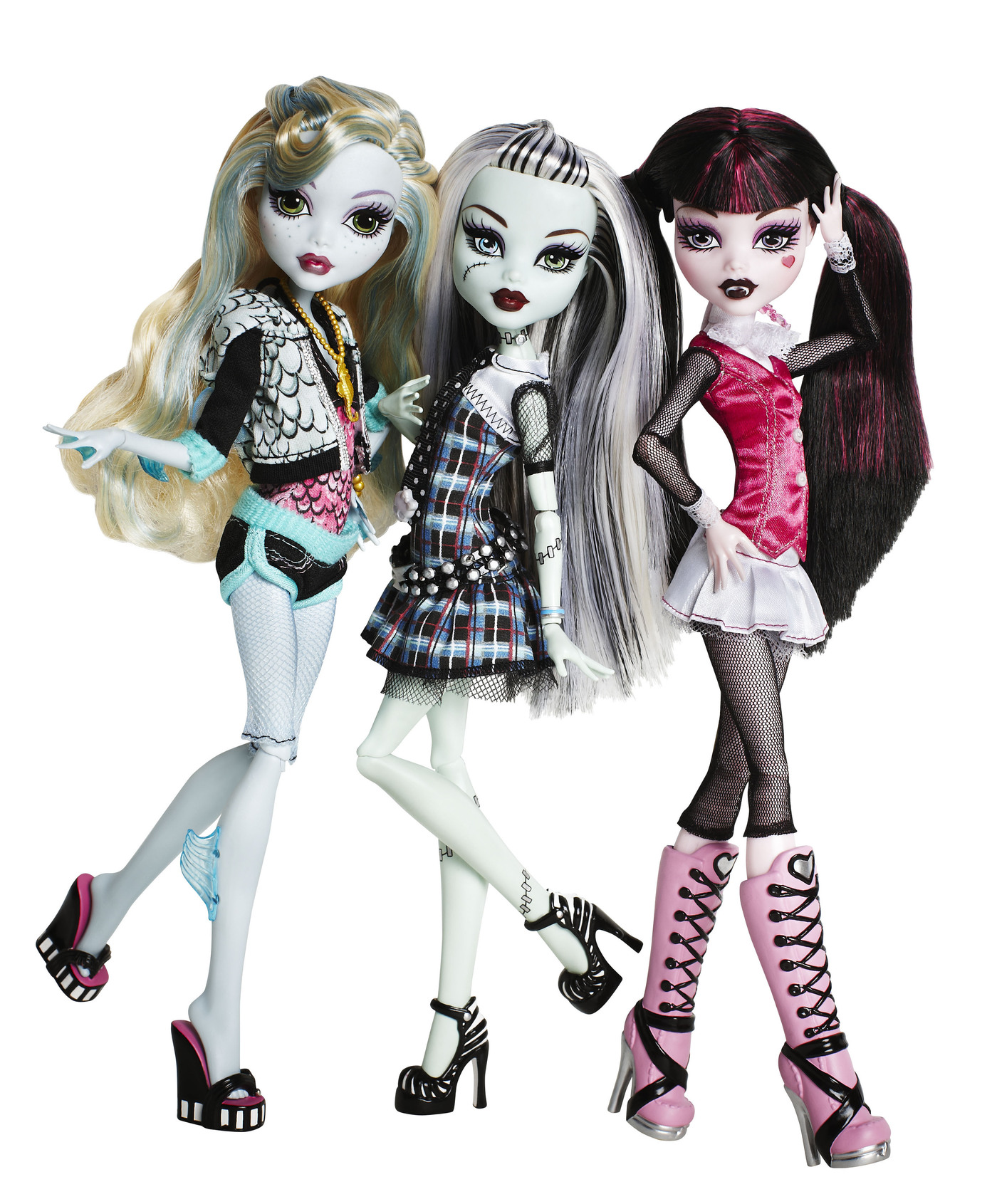
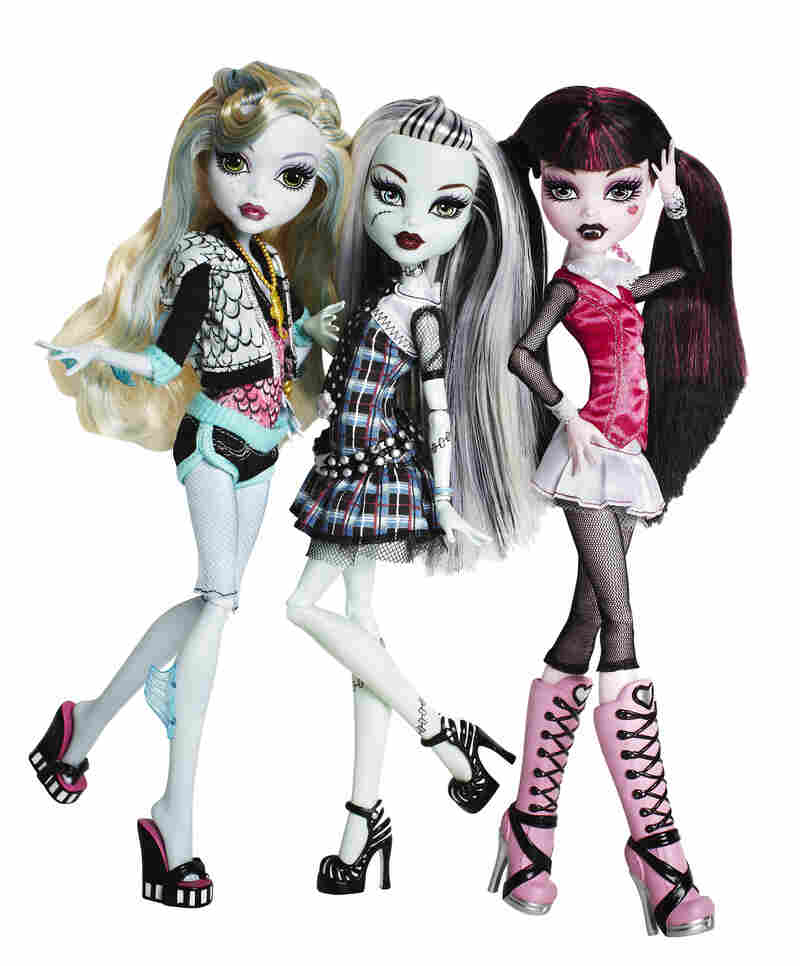
Mattel executives say they did not anticipate the runaway success of the goth-influenced Monster High brand when it debuted in 2010. Mattel hide caption

toggle caption
Mattel

Mattel executives say they did not anticipate the runaway success of the goth-influenced Monster High brand when it debuted in 2010.

Mattel

We've got two words for you: Goth Barbie.

Not only does such a thing exist, but after Barbie, it's the best-selling doll in the world. The dolls of Monster High are bone-thin beauties all related to famous monsters. They come with books and Web episodes that follow their stories in that place where everyone feels like a freak — in high school.

Monster High is made by the world's biggest toy company, which also manufactures Barbie. But no one at Mattel expected Monster High to become one of the biggest retail sensations of the past several years. Last winter at Toy Fair, New York's annual showcase of top toys, Monster High wannabes were everywhere — even zombie princesses that Walt Disney could have never imagined, including zombie Snow White and a zombie Little Mermaid.

In the hopping Toy Fair compound run by Mattel, Barbie's pink displays seemed almost dowdy and passe next to Monster High's glamorous dolls, which look like the underfed love children of Tim Burton and Lady Gaga. Mattel's Dana De Celis is showing off a pretty brunette doll with flowing hair and wolfish ears: "She's our werewolf so she's gonna howl for us," De Celis says as the doll issues an electronic wolf howl. "She tosses her head back, she arches her back, she closes her eyes and she is literally howling at the moon."

"The message about the brand is really to celebrate your own freaky flaws, especially as bullying has become such a hot topic," says Cathy Cline. She's in charge of marketing for Mattel's girls' brands — and sales have surged 56 percent this year, thanks to Monster High. "And it's also one of the fastest growing brands within the entire toy industry," Cline adds.

Mattel had no idea Monster High would — in just three years — become a billion dollar brand, says Kiyomi Haverly, vice president of design at Mattel. "Honestly, it was very surprising to us. We just noticed girls were into darker goth fashion." And Twilight and zombies — but Monster High dolls are designed for girls ages 6 to 12, so they're not too terribly dark.

The characters are plugged into the same kind of things a cool 16-year-old might enjoy, like rockabilly, snowboarding and environmental activism. Draculaura, for example (she's Dracula's daughter), can't stand the thought of blood. "She's a vegan. She's turned off by meat," says Haverly. "Girls could really relate to that because that's part of what they're thinking of these days."

But that 21st century relatability surprised toy analyst Gerrick Johnson, who says he didn't take Monster High seriously when the dolls debuted in 2010. "I didn't think it would work. Why does Barbie work? Barbie works because she's aspirational. Girls want to be like Barbie." Johnson says he figured the "ghoulfriends" of Monster High would be more like Shrek. "Shrek has never worked in toy format, because no boy wants to be a green ogre from the swamp. He wants to be Luke Skywalker."

But for Rebecca Salms, Monster High, with all its fangs and fishnets, feels far more relatable than Barbie. Salms is the mother of a 9-year-old and is a self-described ex-goth. But, she says, there is one thing about them that really turns her off. Monster High dolls make Barbie look fat. "Their arms are so skinny that you need to take off the hands to get the sleeves on the arms," she says. "That's how scrawny they've made them."

That hasn't deterred Salm's daughter, Keiko, who's playing with her Monster High dolls in her sunny, lavender-painted upstairs bedroom with her friend, Jade. They have between them exactly 30 Monster High dolls, and together they play out a scene where two of the dolls set out to teach snooty mummy Cleo DeNile a lesson.

The doll that may ultimately learn a lesson is the toy world's reigning queen. Recently, Barbie sales have been dropping.

How To Introduce Kids To Tough Topics? Art And TV Can Help

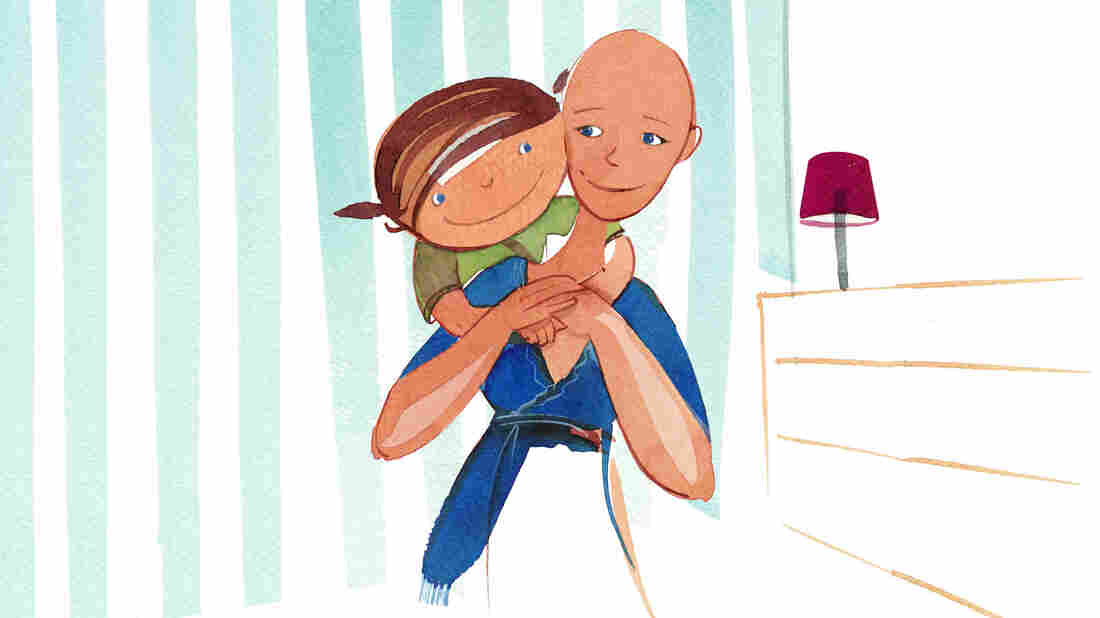
Sue Glader wrote Nowhere Hair after finding that many children's books about cancer were too depressing or scary. Courtesy Sue Glader hide caption

toggle caption
Courtesy Sue Glader

Sue Glader wrote Nowhere Hair after finding that many children's books about cancer were too depressing or scary.

Courtesy Sue Glader

Parents steer their kids to media for all kinds of things: as a distraction so they can make dinner, to teach letters and numbers, and for pure entertainment. There are also times when parents rely on books, TV, museums and other media when they aren't quite sure how to approach a difficult topic by themselves.

Linda Ellerbee is the queen of hard subjects. Domestic abuse, Sept. 11, alcoholism and living with HIV are among the many tough issues she's covered in the 22 years since she's hosted NickNews on Nickelodeon. The show is written for 9- to 13-year-olds, and Ellerbee says her one rule of thumb is don't dumb it down.

"Our viewers are smart people," she says. "They are merely younger, less experienced and shorter." They also possess a more limited vocabulary, but Ellerbee she still uses words they might not know, like "intervention" or "hijacking."

"If I'm going to use a word that I think a 10-year-old might not understand," she says, "I either explain what the word means or use it in such a way that it's absolutely clear what the word means. I don't change the word."

NickNews is also known for letting kids do the talking: Children who've experienced all kinds of difficulties go on air to explain what their lives are like and how they're coping. Ellerbee says it's an effective way to explain a hard subject to young people. But, she cautions, don't do it too soon.

"That's why we haven't gone to Newtown yet to do a show with those kids or, you know, about what happened," she says. "It's about timing. You need to sort of let some things settle."

For the producers of Glee, meanwhile, the right time was four months after Newtown. Last April, the Fox series did an episode in which the high school goes on lockdown when a student's gun goes off. Some Newtown, Conn., residents urged people in the community to boycott the show.

The way adolescent brain works is such that 'bad things happen to other people' ... So what I think ['Glee'] did was to strike empathy and understanding amongst that age group.

Dr. Jennifer Powell-Lunder

Psychologist Jennifer Powell-Lunder says the dangers of that Glee episode vary depending of who's watching it. "It is not a good show for kids who've been through such a trauma to be viewing," she says. "And it's very simple: Because it's too close to home, it retraumatizes them."

For teenagers who haven't experienced a similar tragedy, Powell-Lunder says, the episode was well done. "Really, the way the adolescent brain works is such that bad things happen to other people," she says. "So what I think it did is strike empathy and understanding amongst that age group and amongst all of us about the fear and the terror of the unknown."

The Right Book For Rough Subjects

In the late 1980s psychologist Jerome Singer warned, "Television is like having a stranger in the house." Most parents wouldn't want their children learning about the dangers of the world from a stranger, and that includes TV, he said when he was at Yale. At the same time, some parents need help starting the conversation. For young children, the right book can help, especially since reading together naturally lends itself to conversation.

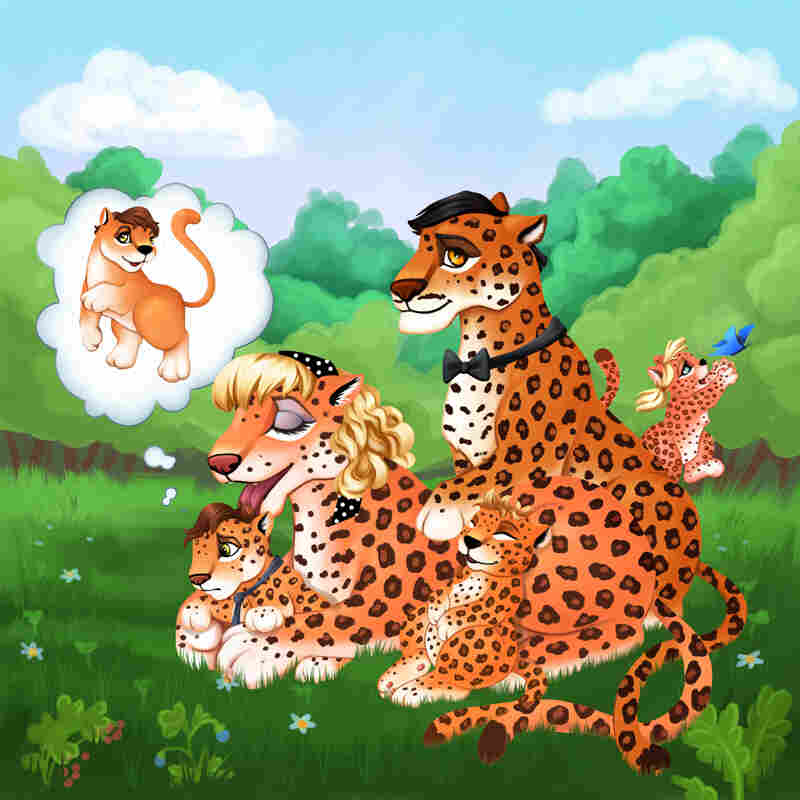
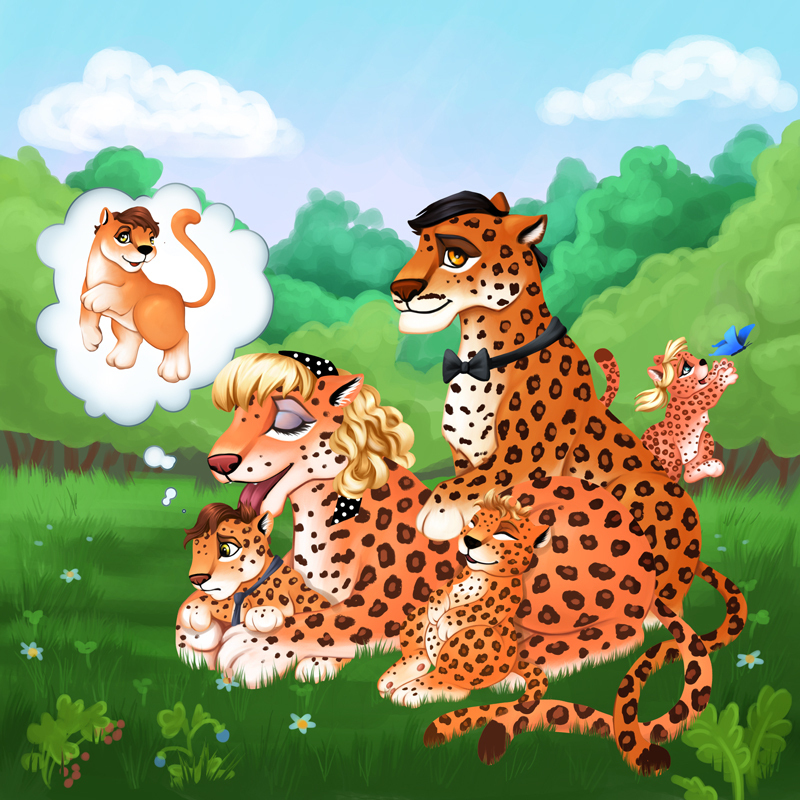
In When Leonard Lost His Spots, Leonard transitions from leopard to lioness. Here, Leonard is shown as a cub, dreaming of life without spots. Courtesy Happy Family! hide caption

toggle caption
Courtesy Happy Family!

In When Leonard Lost His Spots, Leonard transitions from leopard to lioness. Here, Leonard is shown as a cub, dreaming of life without spots.

Courtesy Happy Family!

Case in point: The picture book When Leonard Lost His Spots: A Trans Parent Tail by Monique Costa addresses an issue you rarely find in children's literature — transgender. With playful rhymes and Disney-like illustrations, a tiger cub tells how he feels about his father becoming a female:

"I didn't know how to react.
Or even what to say.
I pretended not to notice him.
I wish he'd go away."

The cub feels shame, anger and fear. That openness is something publishers Cheril Clarke and Monica Bey-Clarke were drawn to. Their company, My Family!, focuses on children's books about nontraditional families. "It doesn't shy away from the fact that [the] cub is struggling inside," Clarke says. "It's a very honest story from a child's point of view."

But if a book for small children is too depressing, some adults just won't buy it. When Sue Glader was diagnosed with breast cancer, she went looking for books to read to her nieces and nephews. "I saw a lot of things that were really very sad and very scary or supertechnical for a young child," she says. So when she was going through chemotherapy, she wrote the book Nowhere Hair:

"A sparrow might have borrowed it to warm her fancy nest.
Perhaps she stuffed a pillow to help grandma get some rest.
The day I asked her where it went
She had a simple answer
'I'm bald because of medicine
I take to cure my cancer."

Glader's advice for talking to kids about hard subjects is be "silly ... in the right places."

Sculpting And Touching Tragedy

As hard as it might be to talk to a child about cancer, it's still a relatively concrete and present subject. Talking about difficult issues in the news is a different challenge. When it's the so-called "crime of crimes," many adults would rather not think about it at all, let alone talk about it with kids.

Artist and activist Naomi Natale is trying to get young people, as well as grown-ups, to understand genocide with a project called One Million Bones.

Pre-K through 12th-grade students at several hundred schools around the country have been sculpting human bones out of clay for a mass grave to be displayed on the National Mall to honor the victims of genocide.

At Georgetown Day Middle School in Washington, D.C., 12-year-old Cole Wright-Schaner made a spine. "It was kind of disturbing to make it, thinking of all the people that have died in the African countries," he says. "It really opened my eyes to genocide and what's going on in the world. We live in such a safe country."

Natale says the simple, physical process of making a bone is what makes genocide personal. "If you can think about the bone that's in your hand, and that you're using your hands to craft another bone, you know — representative of our lives and evidence we existed," she says.

Life-size wax figures at the National Great Blacks in Wax Museum depict the grim realities of slavery. Courtesy Great Blacks In Wax Museum hide caption

toggle caption
Courtesy Great Blacks In Wax Museum

Life-size wax figures at the National Great Blacks in Wax Museum depict the grim realities of slavery.

Courtesy Great Blacks In Wax Museum

And young people can comprehend a difficult subject better by seeing it or touching it. At the National Great Blacks in Wax Museum in Baltimore, they get to do both.

Joanne Martin founded the museum with her late husband, Elmer Martin. They assembled an exhibition on slavery that is both extraordinary and grim: The museum has actual slave chains and shackles that visitors can hold. The weight alone drives home the brutality of slavery.

There's also a replica of a slave ship. Narrow, creaky steps take visitors down below. It's dark and there are life-sized statues of men, women and children with chains and shackles around their legs and their necks.

On a recent trip to the museum, fifth-grade teacher Damien Samuels said his students from KIPP Middle School in Charlotte, N.C., were "significantly affected" by the slave ship. He says teaching the complete story of slavery is challenging. It's easy to find stories about escaping slavery and abolitionists but most media skirt the really difficult parts.

"Even the textbooks shy away from certain images," Samuels says. "I think this museum does a very good job at showing the graphic details. So I think this is a very, very good opportunity for [the students] to really, really appreciate what their ancestors have been through."

The Great Blacks in Wax Museum also includes many stories that celebrate African-Americans' achievements over the decades, from civil rights to space exploration to the White House. Leaving young people with a sense of hope is important whenever media tackle hard subjects, says Nickelodeon's Linda Ellerbee.

"Wherever bad things happen, you always find good people trying to make it better," she says. "And there are more good people than there are bad people."

Pedal Power To Horsepower: Toys Point Toward Future Of Cars

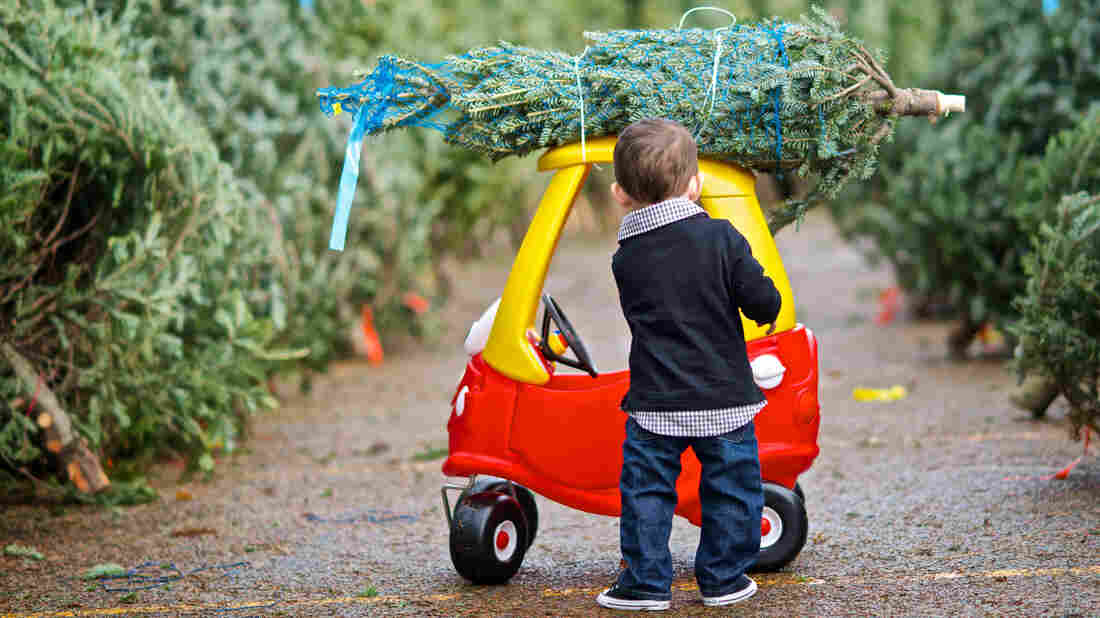
Kids play with toy cars like the Cozy Coupe partly because they want to imitate their parents: turn a steering wheel, open a door, strap a Christmas tree to the roof. But toy cars aren't just fun and games; they can suggest future trends in the automobile industry. Frank Guido/Flickr hide caption

toggle caption
Frank Guido/Flickr

Kids play with toy cars like the Cozy Coupe partly because they want to imitate their parents: turn a steering wheel, open a door, strap a Christmas tree to the roof. But toy cars aren't just fun and games; they can suggest future trends in the automobile industry.

Frank Guido/Flickr

Morning Edition has reported that the Toyota Camry is the best-selling car in the U.S., and the Ford Focus is the world's best-seller.

Now it's time for a correction of sorts because it turns out the dominance of the Focus and Camry is rivaled by another car. It's American-made, has zero emissions and is highly affordable. We're talking about the Cozy Coupe — the yellow-roofed, red-bodied, kid-sized toy car.

Toys like the Cozy Coupe are more than just child's play. In fact, if you want to find out about the future of the auto industry, there's no better place to start than at a playground — like the one at California's Culver City Montessori School, where Cozy Coupes are one of the most popular toys.

Culver City Montessori teacher Micah Card explains that wanting to be "like Mommy and Daddy," as one child puts it, is a major part of a toy automobile's appeal.

"They really enjoy the Cozy Coupe cars because ... it has a roof, it has a door to open, it even has [a] little gas nozzle. They'll fight over those cars," Card says. "They don't really care so much for the open-top type ... because it's not as close an approximation to what their family drives. You know, they want to do what their parents do."

Do Cars Mean Freedom, Or Pollution?

Children become aware of cars, buses, trucks and planes — and the toys based on them — very early on. Richard Gottlieb, who makes a living analyzing trends in the toy industry, says playing with cars is fundamental.

"When they do these archaeological digs from Egypt or Rome they'll find little horse and chariots," he says. "They're primitive ... [the kind] that kids play with. So I think the desire to roll things has always been there."

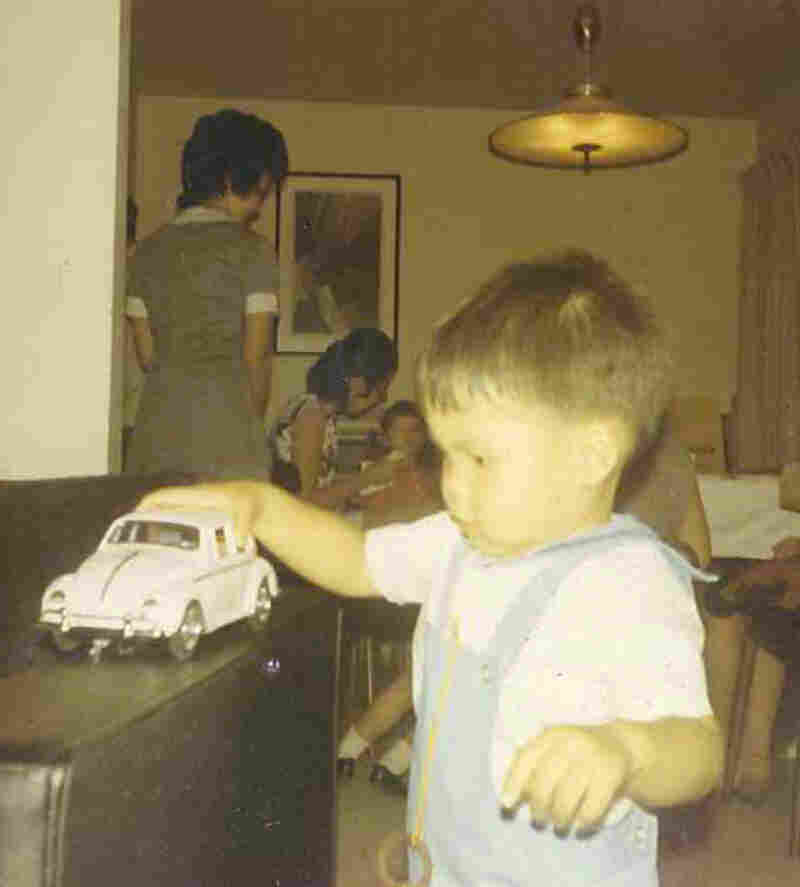
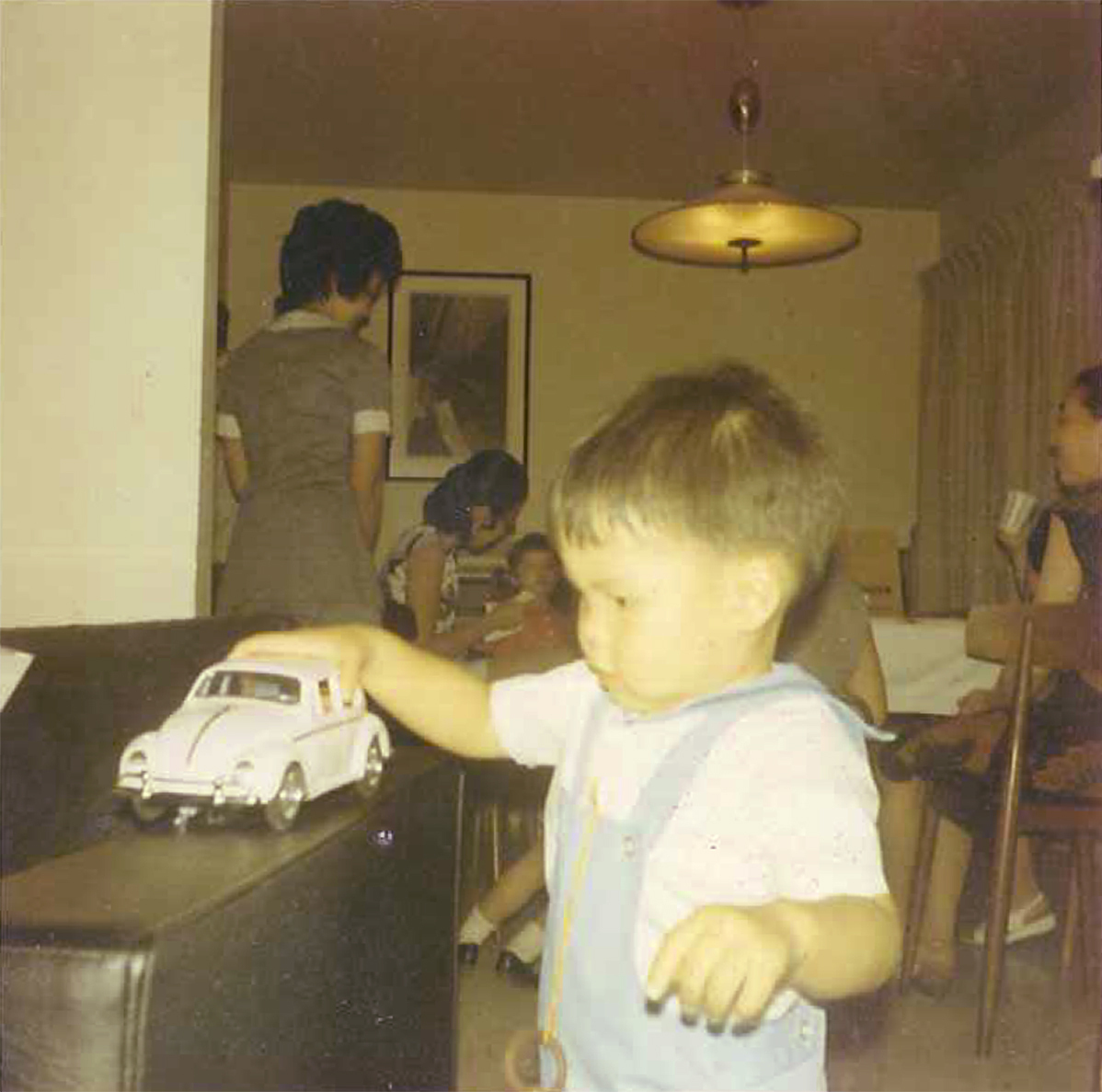
Mark Takahashi is now one of the "car people" at Edmunds.com — but at the age of 2, the future automotive editor, like his co-worker Mike MaGrath, was more of a toy-car person. Courtesy Mark Takahashi hide caption

toggle caption
Courtesy Mark Takahashi

Mark Takahashi is now one of the "car people" at Edmunds.com — but at the age of 2, the future automotive editor, like his co-worker Mike MaGrath, was more of a toy-car person.

Courtesy Mark Takahashi

Gottlieb says the eagerness to play with cars hasn't changed but what kids think about those cars has.

"From an aspirational sense, I don't think children aspire to drive as much as they used to," Gottlieb says. "I think they aspire to have a cellphone, but not necessarily a car."

Indeed, driving as a rite of passage has diminished greatly in recent years. For some, cars still mean freedom, speed and escape; for others they mean isolation, gridlock and pollution.

Gottlieb says kids pick up on that, which is why you see more and more cars that have faces and stories, as in Pixar's Cars movies.

"If you really think about it, the children are engaging the characters; they're not engaging the brands," Gottlieb explains. "Maybe not great news for the car companies, but I think that probably signals some of the loss of prestige for driving among youth."

The declining appeal of the automobile might not be good news for toy companies either. Kids' love for cars used to drive a passion for their toys; at least that's how it worked for Mike Magrath.

Today, Magrath is an editor at Edmunds.com, an online source of automotive information. At the office building where he works, nearly every single one of his co-workers has toy cars strewn across his or her desk. Magrath can still remember the first car he fell in love with.

"Mine was probably a pedal car. It wasn't a toy car per se, like a Matchbox or a Hot Wheels, but I remember this small, I think it was rocket-ship designed — it had pedals, and you could run it with your feet."

"I would always try to go just as fast as I can down through the kitchen and down the stairs. It's all I wanted ... because I thought if I hit those stairs fast enough, I would just leave the house," he remembers. "It just ended up with my mom installing a safety gate. But I loved that toy."

Magrath didn't know at that age that he wanted to work with cars.

"I just knew that cars sort of represented something I could play with, something that I could go out and have adventures in," he says. "And it never stopped."

Kids' Cars Go Green

The connection between the fantasy world of toy cars and their real-life counterparts is absolutely direct — a highway that moves in both directions, very fast. Car companies license their designs to toy companies, and toy companies reflect auto trends in their merchandise.

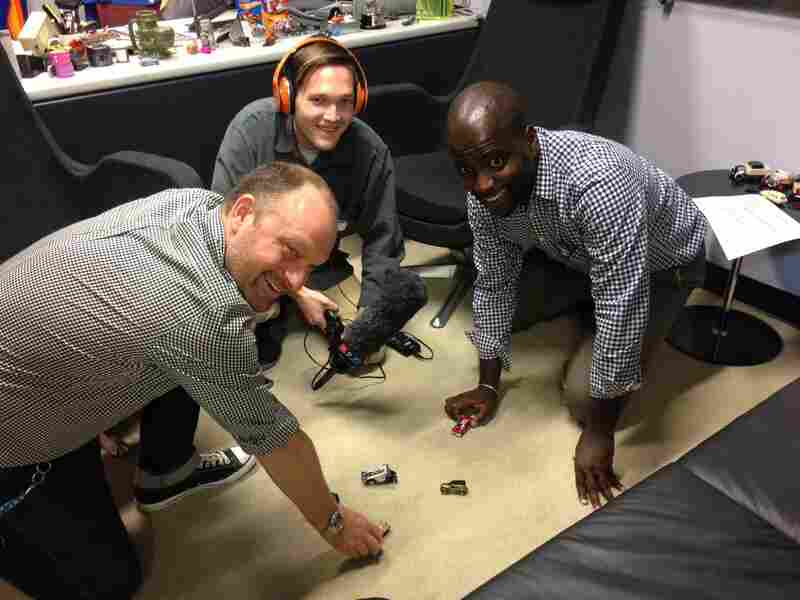
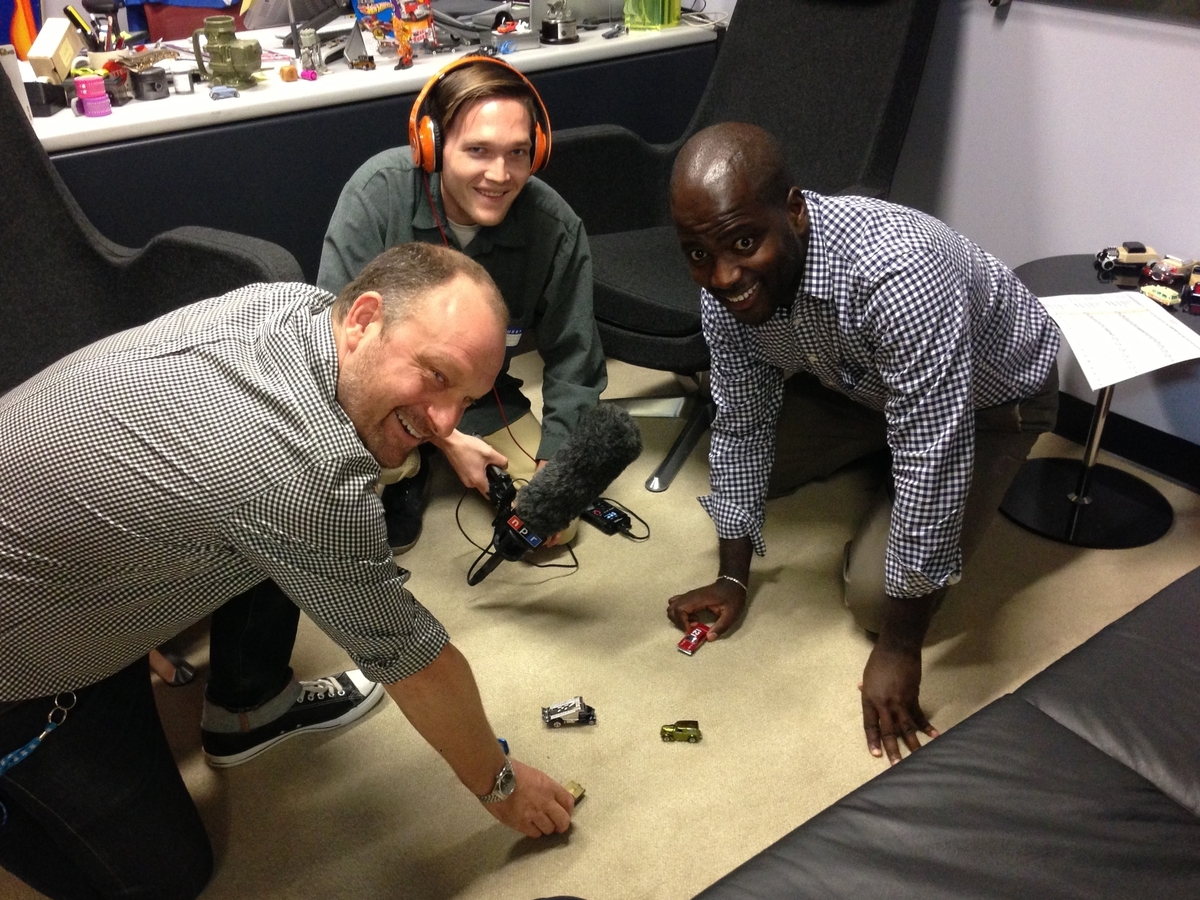
Felix Holst, left, is the head designer of Hot Wheels and Matchbox cars for Mattel. Holst demonstrates some of his team's designs to Aaron Schrank, center, and Sonari Glinton. Courtesy Kristin Hull hide caption

toggle caption
Courtesy Kristin Hull

Felix Holst, left, is the head designer of Hot Wheels and Matchbox cars for Mattel. Holst demonstrates some of his team's designs to Aaron Schrank, center, and Sonari Glinton.

Courtesy Kristin Hull

At the intersection of those worlds is Felix Holst, the chief designer of Matchbox and Hot Wheels for Mattel, the toy conglomerate. He calls his home base in El Segundo, Calif., "the most wonderful place in the world."

Holst takes toy cars very seriously. He and his team design dozens of them a year, and they sell well over 6 million a week.

Holst's job is to listen to little boys and girls and give them (and their parents) what they want. What he's found is that the new generation of children — 3- to 6-years-olds — really cares about issues like green design.

"Six-year-olds are talking about green design in school. ... Six-year-olds are learning about energy conservation and recycling," he says. "They're learning about pollution. They're learning about gasoline engines vs. electric cars."

So Holst has been designing cars that signal to kids that they are fuel-efficient — that they represent something different than the experience their parents are having right now. He says car designers have to learn a new visual language to make cars attractive for modern children.

"What we're finding ... for kids is that driving is not — it's not an appetizing prospect," Holst says. "It's very difficult. It's very costly. It's dangerous. ... They're more connected now than they ever were before."

Selling Toys, Creating Customers

The companies that Mattel contracts with — that is, all the major automakers — increasingly have to talk that language to kids as well. Ford's Patrick Mulligan says companies like his go to great lengths to make an impression on kids through licensing deals.

"When a company makes a toy of a Mustang, and it's going to have an engine sound, we make sure that that engine sound sounds like a Mustang," he says.

Kids can tell the difference, Mulligan explains.

"They know a Ford from a Chevrolet from a Dodge from a Toyota, and they have their favorite," he says.

Before Mulligan was in the car business, he was in the toy business. He says that because today's children are less interested in brands, it's not enough to just get kids to know a Ford from a Chevy. He wants kids to know what Ford is about.

"It's things like figuring out ways to integrate SYNC ... into a toy so that children see how Ford is a company that's at the leading edge of technology," he explains.

Car companies are hoping that if they can interest these kids in driving now, they'll be drivers in the future — and that when they trade in those Cozy Coupes for highway-ready vehicles, they might be choosing between brands they recognize from their toy boxes.

Teens Find The Right Tools For Their Social-Media Jobs

Once upon a time, it was MySpace. (Huh. Turns out you can still link to it.) Then Facebook happened. And Twitter. And beyond those two dominant social-media platforms, there are a host of other, newer options for staying in touch and letting the digital universe get a look at your life. And for certain kinds of sharing, some of those other options make more sense to tech-savvy teens than the Big Two do.

On today's All Things Considered, NPR's Sami Yenigun talks to a roomful of teenagers to see who uses which for what these days. (The answer, like most involving tech or teens, is subject to change like the weather.)

When you need to illustrate a story about proliferating social-media platforms, it's good to know that an enterprising stock photographer has probably thought about it already. Anatoliy Babiy/iStockphoto.com hide caption

toggle caption
Anatoliy Babiy/iStockphoto.com

When you need to illustrate a story about proliferating social-media platforms, it's good to know that an enterprising stock photographer has probably thought about it already.

Anatoliy Babiy/iStockphoto.com

Some takeaways:

Facebook is for finding old friends, and maybe for arranging parties. (Unless they're the kind of parties you don't want the police knowing about. "Oftentimes, parties that are all over social media get busted by the cops really easily," one 17-year-old tells Sami.)

Twitter is more for personal expression. "People be in their feelings on Twitter — they vent," says Jamal Royster, 18.

Visual communication? It's a different mode of connection. And as with text-based platforms, use cases vary among the teens Sami talked to.

Vine is where you publish (and watch) short video clips — seven seconds or so. People make all kinds of clever short films with the app. Check out Waka Flocka Elmo, a recent viral hit recommended by 17-year-old Jesse Aniebonam.

Instagram, a relative veteran in the pics-and-flicks category, is the go-to app when it comes to documenting your days and nights. "I Instagram everything," says Grace Plihal, 18. "It's kind of my way of showing myself to the world, I guess."

(Interesting, that, given how much control Instagram gives users over the look and feel of what they post. "Showing myself" is a telling way to put it.)

But the observation that struck me most, when Sami told me about the shape of his story, was this one, from 13-year-old Caroline Lamb. There are times when you want to take a back seat to the story you're telling, she suggests — and those are the times for Tumblr.

Here's how she puts it in her own words:

Oh, one last entry: Snapchat is for selfies you don't want to show up later — like when a college admissions counselor goes Googling for you. Users send snapshots back and forth using a proprietary app.

What makes 'em different from the photos in the MMS messages you can send using most phones' built-in text-messaging programs? Well, you can set Snapchat images to self-destruct: They disappear at most 10 seconds after the recipient views them.

So, Snapchat? It's a near certainty that you don't want to know what the teenagers in your life are doing with it.

From Classic Toys To New Twists, Kids Go Back To Blocks

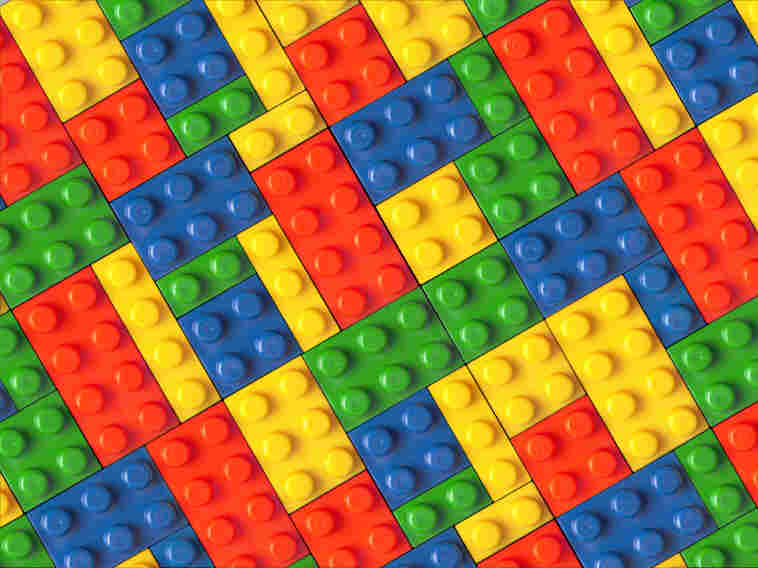
Legos and other interlocking toys are only one kind of blocks that remain popular with kids. iStockphoto.com hide caption

toggle caption
iStockphoto.com

Legos and other interlocking toys are only one kind of blocks that remain popular with kids.

iStockphoto.com

I visited Toy Fair in New York City hunting for ideas for our summer series about kids' culture. One of the big takeaways was the increasing popularity of construction games such as Legos. Sales shot up nearly 20 percent last year. Now, it seems, every major toy manufacturer is scrambling to add new games geared toward kids building things.

Concurrently, I happened to visit the National Building Museum, where an impressive exhibition, PLAY WORK BUILD, showcases the museum's vast collection of block sets and building toys. It also takes blocks into the future – with the David Rockwell-designed Imagination Playground, an azure-blue block fantasy for the under-5 crowd.

That prompted this story on blocks, which starts with a small business selling wooden blocks made in the U.S. (specifically the Unblock, designed and created by the Azmani family in Wisconsin) to the gigantic Legos, Hasbros and Mattels of the world, selling high-concept blocks that often seem like nothing so much as vehicles for cross-promotional licensing.

That prompts the question — what makes a block a block? I asked Karen Hewitt, a toy designer who's written about the history of blocks.

"That it's three dimensional," she offered. "That it's nonrepresentational, it doesn't have anything until a child gives it a name or function. And usually, blocks are modular. They relate to each other in some forms in ratio of size, or shape. They're predictable, so they keep their shape, no matter the material. And blocks basically rely on balance for building."

What would Maria Montessori or Friedrich Froebel think of Minecraft? They were pioneers of early education who made block play central to their philosophies. Minecraft is the hugely popular virtual game that invites its 10 million players to manipulate a world made of blocks.

"Montessori was quite a brilliant woman. I think she'd be very interested in what's going on today," Hewitt observes dryly. She was polite about Minecraft ("It just doesn't have that sensory feeling for me") but copped to a real fascination with new games that synthesize real blocks and with ones on screens. For example, the inevitable Lego-Minecraft tie-in, or a math-based game, Building Blocks, that uses actual and virtual blocks.

But Hewitt believes the lesson of blocks is even more fundamental and powerful than exploring ideas of geometry, spatial relations, patterning and numbers. When kids play with blocks, they're beginning to build.

"The ability to construct has to do with our whole culture — where do we live, how do we make our homes," she says. "It's really the beginning of thinking about survival.

Kids have loved blocks for so long and so loyally, it's a bit of a surprise Hollywood has not attempted to cash in. Blocks: The Movie. Sounds like a blockbuster.