Showing posts with label kids and teens. Show all posts

Thursday, May 14, 2015

An 'Adventure' For Kids And Maybe For Their Parents, Too

Finn is in the middle, with the skinny arms. Jake is the dog. Together, they have Adventure Time. i

Finn is in the middle, with the skinny arms. Jake is the dog. Together, they have Adventure Time. Cartoon Network hide caption

itoggle caption Cartoon Network
Finn is in the middle, with the skinny arms. Jake is the dog. Together, they have Adventure Time.

Finn is in the middle, with the skinny arms. Jake is the dog. Together, they have Adventure Time.

Cartoon Network

Count plenty of grown-ups among the millions of fans of Adventure Time, a kids' show on Cartoon Network. Some are surely Emmy voters. (It's won three.) Others are very possibly stoners. Still others are intellectuals. Lev Grossman falls in the last category. He wrote two best-selling novels, The Magicians and The Magician King, and he's Time's senior book critic.

Grossman's critique of Adventure Time? "It's soooo smart! It's sooo intelligent!"

Hang on. He's just getting started.

"I am a little bit obsessed with it," Grossman continues. "It's rich and complicated the way Balzac's work is, which is a funny thing to say about a cartoon."

For the uninitiated, Adventure Time is set in a surreally pastel post-apocalyptic kingdom crawling with mutated candy creatures, bizarre princesses — think Slime Princess and Lumpy Space Princess — and our two heroes. They're Finn and Jake, a gangly human boy and his moon-eyed yellow dog.

The show's creator, Pendleton Ward, modeled Jake partly after Bill Murray's sardonic camp counselor in the 1979 movie Meatballs, a cooler-than-cool older-brother figure who can laugh at his charges without being mean and whose teachable moments are anything but cloying.

"Jake sees his own death in one episode," says Ward. "And Finn has to deal with that. Jake's a hip guy. He can watch his own death, and he's comfortable with it, and that's a weird thing, especially for Finn, who's superyoung, and it's really hard on him."

In the episode, called "New Frontier," Jake experiences a vision during which he's taken to an afterlife of stars and darkness by a little bananalike creature (voiced by Weird Al Yankovic).

"When I die, I'm gonna be all around you," Jake reassures Finn. "In your nose. And your dreams. And socks! I'll be a part of you in your earth mind. It's gonna be great!"

"That episode was really tough to tackle, writing it for a children's television show," Ward remembers. "It was hard for us to really not make it so sad and scary that you feel really sad and scared watching it."

Adventure Time insists on emotional honesty — even in its bad guys, usually depicted as cardboard villains in kids' cartoons.

Grossman offers the shrill, socially maladapted Earl of Lemongrab as an example. An unlikable character, his story is movingly explored and raises questions nearly every kid has wondered about: Why do I seem weird to other people? Why do I seem weird to myself?

Or take the buffoonish, bandy-legged and morally compromised Ice King. "[He's] psychologically plausible," Grossman observes. "He's an old lecherous man who has a magical crown. It's made him into this strange, awful individual who goes around capturing princesses."

The king's crown wiped his mind and warped his body. He'll die if he takes it off.

"Which is this rather moving tension, and he doesn't remember who he used to be, but other people do," Grossman says. "It's very affecting. My dad has been going through having Alzheimer's, and he's forgotten so much about who he used to be. And I look at him and think this cartoon is about my father dying."

In spite of the critical admiration, the warm feelings of fans and the prestigious awards, Adventure Time nearly never aired. "It actually felt like a great risk," says Rob Sorcher, the Cartoon Network's chief content officer. "It's not slick. It doesn't feel manufactured for kids, so who's it for?"

Um, perhaps partly for the kind of grown-up who might watch Yo Gabba Gabba with a little chemical assist?

"For me, it doesn't come from that place," says Ward. "For me, it comes from my childhood, wandering in my mind. You can't really go anywhere when you're a kid. I don't have a car, I don't have anything. I just have my backyard and my brain. And that's where I'm coming from when I'm writing it." He pauses. "I can't speak for all the writers on the show."

Ward and his mother used to watch cartoons together when he was a kid, but he claims today he's not writing specifically for a co-viewing audience of parents and kids. Still, author Grossman says Adventure Time works for him and his 8-year-old daughter, Lily, equally.

"It's really important for us to have something we can enjoy together and talk about together. It gives us in some ways a common language for talking about more important issues," he says.

Adventure Time's world used to be our world. Then it was destroyed by a war. It's strewn with detritus such as old computers, VHS tapes and video games from the 1980s.

"It takes my childhood, the shattered pieces of it, and builds it into something new, which is now part of Lily's childhood," he says, almost in wonder.

post from sitemap

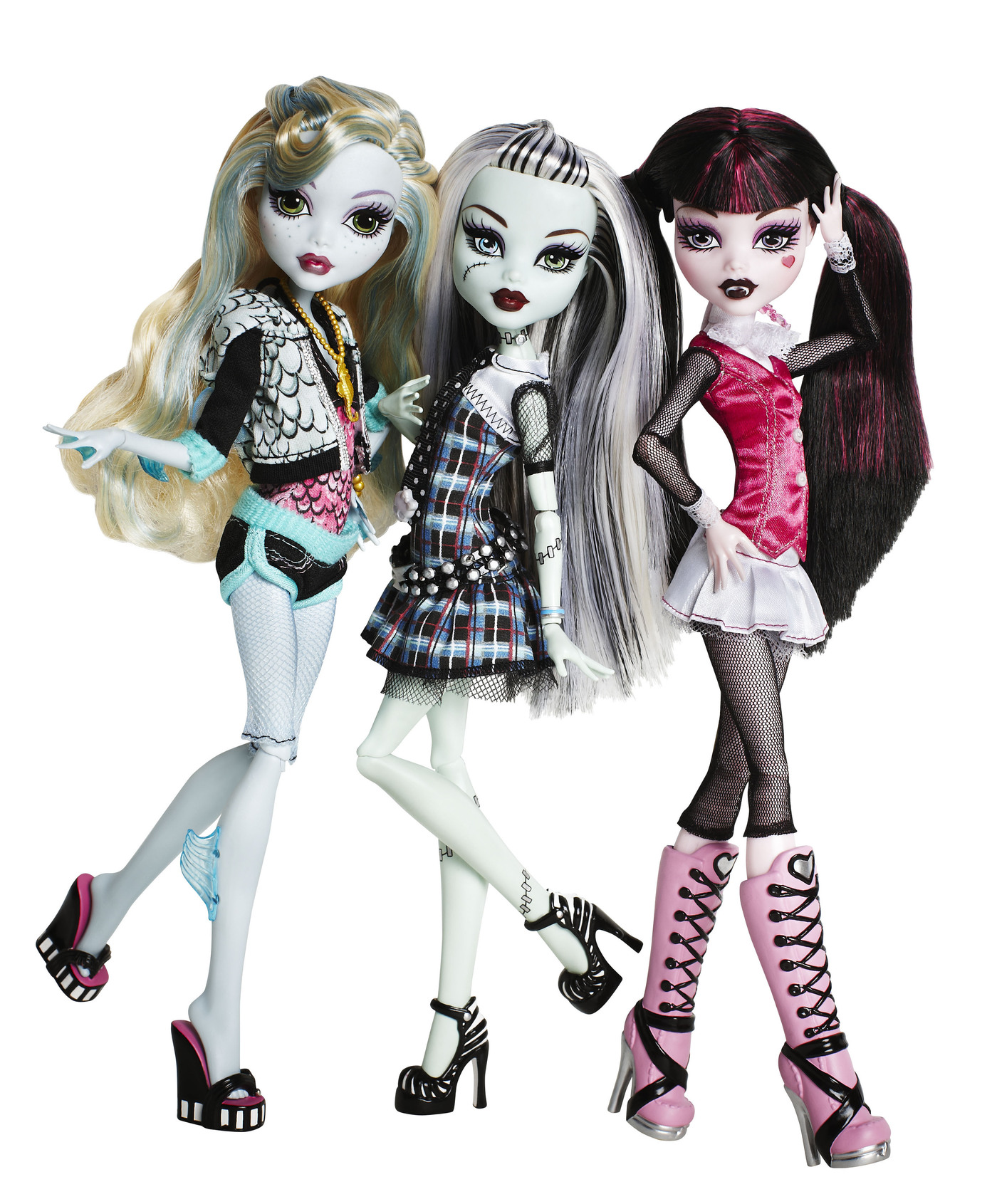
Fangs And Fishnets For The Win: 'Goth Barbie' Is Monstrously Successful

Mattel executives say they did not anticipate the runaway success of the goth-influenced Monster High brand when it debuted in 2010. i

Mattel executives say they did not anticipate the runaway success of the goth-influenced Monster High brand when it debuted in 2010. Mattel hide caption

itoggle caption Mattel
Mattel executives say they did not anticipate the runaway success of the goth-influenced Monster High brand when it debuted in 2010.

Mattel executives say they did not anticipate the runaway success of the goth-influenced Monster High brand when it debuted in 2010.

Mattel

We've got two words for you: Goth Barbie.

Not only does such a thing exist, but after Barbie, it's the best-selling doll in the world. The dolls of Monster High are bone-thin beauties all related to famous monsters. They come with books and Web episodes that follow their stories in that place where everyone feels like a freak — in high school.

Monster High is made by the world's biggest toy company, which also manufactures Barbie. But no one at Mattel expected Monster High to become one of the biggest retail sensations of the past several years. Last winter at Toy Fair, New York's annual showcase of top toys, Monster High wannabes were everywhere — even zombie princesses that Walt Disney could have never imagined, including zombie Snow White and a zombie Little Mermaid.

In the hopping Toy Fair compound run by Mattel, Barbie's pink displays seemed almost dowdy and passe next to Monster High's glamorous dolls, which look like the underfed love children of Tim Burton and Lady Gaga. Mattel's Dana De Celis is showing off a pretty brunette doll with flowing hair and wolfish ears: "She's our werewolf so she's gonna howl for us," De Celis says as the doll issues an electronic wolf howl. "She tosses her head back, she arches her back, she closes her eyes and she is literally howling at the moon."

More From The Media For Kids And Teens Series:

"The message about the brand is really to celebrate your own freaky flaws, especially as bullying has become such a hot topic," says Cathy Cline. She's in charge of marketing for Mattel's girls' brands — and sales have surged 56 percent this year, thanks to Monster High. "And it's also one of the fastest growing brands within the entire toy industry," Cline adds.

Mattel had no idea Monster High would — in just three years — become a billion dollar brand, says Kiyomi Haverly, vice president of design at Mattel. "Honestly, it was very surprising to us. We just noticed girls were into darker goth fashion." And Twilight and zombies — but Monster High dolls are designed for girls ages 6 to 12, so they're not too terribly dark.

The characters are plugged into the same kind of things a cool 16-year-old might enjoy, like rockabilly, snowboarding and environmental activism. Draculaura, for example (she's Dracula's daughter), can't stand the thought of blood. "She's a vegan. She's turned off by meat," says Haverly. "Girls could really relate to that because that's part of what they're thinking of these days."

But that 21st century relatability surprised toy analyst Gerrick Johnson, who says he didn't take Monster High seriously when the dolls debuted in 2010. "I didn't think it would work. Why does Barbie work? Barbie works because she's aspirational. Girls want to be like Barbie." Johnson says he figured the "ghoulfriends" of Monster High would be more like Shrek. "Shrek has never worked in toy format, because no boy wants to be a green ogre from the swamp. He wants to be Luke Skywalker."

But for Rebecca Salms, Monster High, with all its fangs and fishnets, feels far more relatable than Barbie. Salms is the mother of a 9-year-old and is a self-described ex-goth. But, she says, there is one thing about them that really turns her off. Monster High dolls make Barbie look fat. "Their arms are so skinny that you need to take off the hands to get the sleeves on the arms," she says. "That's how scrawny they've made them."

That hasn't deterred Salm's daughter, Keiko, who's playing with her Monster High dolls in her sunny, lavender-painted upstairs bedroom with her friend, Jade. They have between them exactly 30 Monster High dolls, and together they play out a scene where two of the dolls set out to teach snooty mummy Cleo DeNile a lesson.

The doll that may ultimately learn a lesson is the toy world's reigning queen. Recently, Barbie sales have been dropping.

post from sitemap

The Kendama: Can A Wooden Toy Be A Viral Sensation?

Nine-year-old Logan Tosta and his sister, Avery, show a class of second-graders at Michael J. Castori Elementary School in Sacramento, Calif. how to play with a kendama.

Nine-year-old Logan Tosta and his sister, Avery, show a class of second-graders at Michael J. Castori Elementary School in Sacramento, Calif. how to play with a kendama. Ben Adler/NPR hide caption

itoggle caption Ben Adler/NPR

At a time when young people of all ages are focused on electronics and apps, the popularity of the kendama — a traditional Japanese toy made out of wood — seems like an anomaly. It hasn't caught on all over the U.S. yet, but it's a big craze on the West Coast and sales are growing. Kendama sellers say Sacramento is a particular hot spot. That's where 9-year-old Logan Tosta has honed his skills. (That's him in the video above.)

Logan says it took him about a day to learn how to do his first trick, landing the wooden ball in one of the cups. It was a month before he could get the ball on the spike consistently. Now, he can do tricks with names like Airplane, Jumping Stick and UFO, flipping the stick to catch the ball in different ways.

The traditional Kendama is making a splash with kids. i

The traditional Kendama is making a splash with kids. Norasit Kaewsai/iStockphoto.com hide caption

itoggle caption Norasit Kaewsai/iStockphoto.com
The traditional Kendama is making a splash with kids.

The traditional Kendama is making a splash with kids.

Norasit Kaewsai/iStockphoto.com

Kendamas seem to be the buzz these days at elementary schools all around Sacramento. My kindergartener knew all about them when I brought it up. He said his friends have them. Now he does, too.

But kendamas aren't that easy to find. They're usually at comic book stores, Japanese grocery stores, or online. And they aren't cheap. The one I bought cost about $17.

Vendors are reporting an uptick in the Midwest now, especially in Minnesota and Illinois. Seems like it might be possible for kendamas to go viral, even with no batteries, no screen, no buttons ... just a wooden ball attached to a wooden stick with a string.

post from sitemap

From Classic Toys To New Twists, Kids Go Back To Blocks

Legos and other interlocking toys are only one kind of blocks that remain popular with kids. i

Legos and other interlocking toys are only one kind of blocks that remain popular with kids. iStockphoto.com hide caption

itoggle caption iStockphoto.com
Legos and other interlocking toys are only one kind of blocks that remain popular with kids.

Legos and other interlocking toys are only one kind of blocks that remain popular with kids.

iStockphoto.com

I visited Toy Fair in New York City hunting for ideas for our summer series about kids' culture. One of the big takeaways was the increasing popularity of construction games such as Legos. Sales shot up nearly 20 percent last year. Now, it seems, every major toy manufacturer is scrambling to add new games geared toward kids building things.

Concurrently, I happened to visit the National Building Museum, where an impressive exhibition, PLAY WORK BUILD, showcases the museum's vast collection of block sets and building toys. It also takes blocks into the future – with the David Rockwell-designed Imagination Playground, an azure-blue block fantasy for the under-5 crowd.

That prompted this story on blocks, which starts with a small business selling wooden blocks made in the U.S. (specifically the Unblock, designed and created by the Azmani family in Wisconsin) to the gigantic Legos, Hasbros and Mattels of the world, selling high-concept blocks that often seem like nothing so much as vehicles for cross-promotional licensing.

That prompts the question — what makes a block a block? I asked Karen Hewitt, a toy designer who's written about the history of blocks.

"That it's three dimensional," she offered. "That it's nonrepresentational, it doesn't have anything until a child gives it a name or function. And usually, blocks are modular. They relate to each other in some forms in ratio of size, or shape. They're predictable, so they keep their shape, no matter the material. And blocks basically rely on balance for building."

What would Maria Montessori or Friedrich Froebel think of Minecraft? They were pioneers of early education who made block play central to their philosophies. Minecraft is the hugely popular virtual game that invites its 10 million players to manipulate a world made of blocks.

"Montessori was quite a brilliant woman. I think she'd be very interested in what's going on today," Hewitt observes dryly. She was polite about Minecraft ("It just doesn't have that sensory feeling for me") but copped to a real fascination with new games that synthesize real blocks and with ones on screens. For example, the inevitable Lego-Minecraft tie-in, or a math-based game, Building Blocks, that uses actual and virtual blocks.

But Hewitt believes the lesson of blocks is even more fundamental and powerful than exploring ideas of geometry, spatial relations, patterning and numbers. When kids play with blocks, they're beginning to build.

"The ability to construct has to do with our whole culture — where do we live, how do we make our homes," she says. "It's really the beginning of thinking about survival.

Kids have loved blocks for so long and so loyally, it's a bit of a surprise Hollywood has not attempted to cash in. Blocks: The Movie. Sounds like a blockbuster.

post from sitemap

Tuesday, May 12, 2015

How To Introduce Kids To Tough Topics? Art And TV Can Help

Sue Glader wrote Nowhere Hair after finding that many children's books about cancer were too depressing or scary. i

Sue Glader wrote Nowhere Hair after finding that many children's books about cancer were too depressing or scary. Courtesy Sue Glader hide caption

itoggle caption Courtesy Sue Glader
Sue Glader wrote Nowhere Hair after finding that many children's books about cancer were too depressing or scary.

Sue Glader wrote Nowhere Hair after finding that many children's books about cancer were too depressing or scary.

Courtesy Sue Glader

Parents steer their kids to media for all kinds of things: as a distraction so they can make dinner, to teach letters and numbers, and for pure entertainment. There are also times when parents rely on books, TV, museums and other media when they aren't quite sure how to approach a difficult topic by themselves.

Linda Ellerbee is the queen of hard subjects. Domestic abuse, Sept. 11, alcoholism and living with HIV are among the many tough issues she's covered in the 22 years since she's hosted NickNews on Nickelodeon. The show is written for 9- to 13-year-olds, and Ellerbee says her one rule of thumb is don't dumb it down.

"Our viewers are smart people," she says. "They are merely younger, less experienced and shorter." They also possess a more limited vocabulary, but Ellerbee she still uses words they might not know, like "intervention" or "hijacking."

"If I'm going to use a word that I think a 10-year-old might not understand," she says, "I either explain what the word means or use it in such a way that it's absolutely clear what the word means. I don't change the word."

NickNews is also known for letting kids do the talking: Children who've experienced all kinds of difficulties go on air to explain what their lives are like and how they're coping. Ellerbee says it's an effective way to explain a hard subject to young people. But, she cautions, don't do it too soon.

"That's why we haven't gone to Newtown yet to do a show with those kids or, you know, about what happened," she says. "It's about timing. You need to sort of let some things settle."

For the producers of Glee, meanwhile, the right time was four months after Newtown. Last April, the Fox series did an episode in which the high school goes on lockdown when a student's gun goes off. Some Newtown, Conn., residents urged people in the community to boycott the show.

The way adolescent brain works is such that 'bad things happen to other people' ... So what I think ['Glee'] did was to strike empathy and understanding amongst that age group.

- Dr. Jennifer Powell-Lunder

Psychologist Jennifer Powell-Lunder says the dangers of that Glee episode vary depending of who's watching it. "It is not a good show for kids who've been through such a trauma to be viewing," she says. "And it's very simple: Because it's too close to home, it retraumatizes them."

For teenagers who haven't experienced a similar tragedy, Powell-Lunder says, the episode was well done. "Really, the way the adolescent brain works is such that bad things happen to other people," she says. "So what I think it did is strike empathy and understanding amongst that age group and amongst all of us about the fear and the terror of the unknown."

The Right Book For Rough Subjects

In the late 1980s psychologist Jerome Singer warned, "Television is like having a stranger in the house." Most parents wouldn't want their children learning about the dangers of the world from a stranger, and that includes TV, he said when he was at Yale. At the same time, some parents need help starting the conversation. For young children, the right book can help, especially since reading together naturally lends itself to conversation.

In When Leonard Lost His Spots, Leonard transitions from leopard to lioness. Here, Leonard is shown as a cub, dreaming of life without spots. i

In When Leonard Lost His Spots, Leonard transitions from leopard to lioness. Here, Leonard is shown as a cub, dreaming of life without spots. Courtesy Happy Family! hide caption

itoggle caption Courtesy Happy Family!
In When Leonard Lost His Spots, Leonard transitions from leopard to lioness. Here, Leonard is shown as a cub, dreaming of life without spots.

In When Leonard Lost His Spots, Leonard transitions from leopard to lioness. Here, Leonard is shown as a cub, dreaming of life without spots.

Courtesy Happy Family!

Case in point: The picture book When Leonard Lost His Spots: A Trans Parent Tail by Monique Costa addresses an issue you rarely find in children's literature — transgender. With playful rhymes and Disney-like illustrations, a tiger cub tells how he feels about his father becoming a female:

"I didn't know how to react.
Or even what to say.
I pretended not to notice him.
I wish he'd go away."

The cub feels shame, anger and fear. That openness is something publishers Cheril Clarke and Monica Bey-Clarke were drawn to. Their company, My Family!, focuses on children's books about nontraditional families. "It doesn't shy away from the fact that [the] cub is struggling inside," Clarke says. "It's a very honest story from a child's point of view."

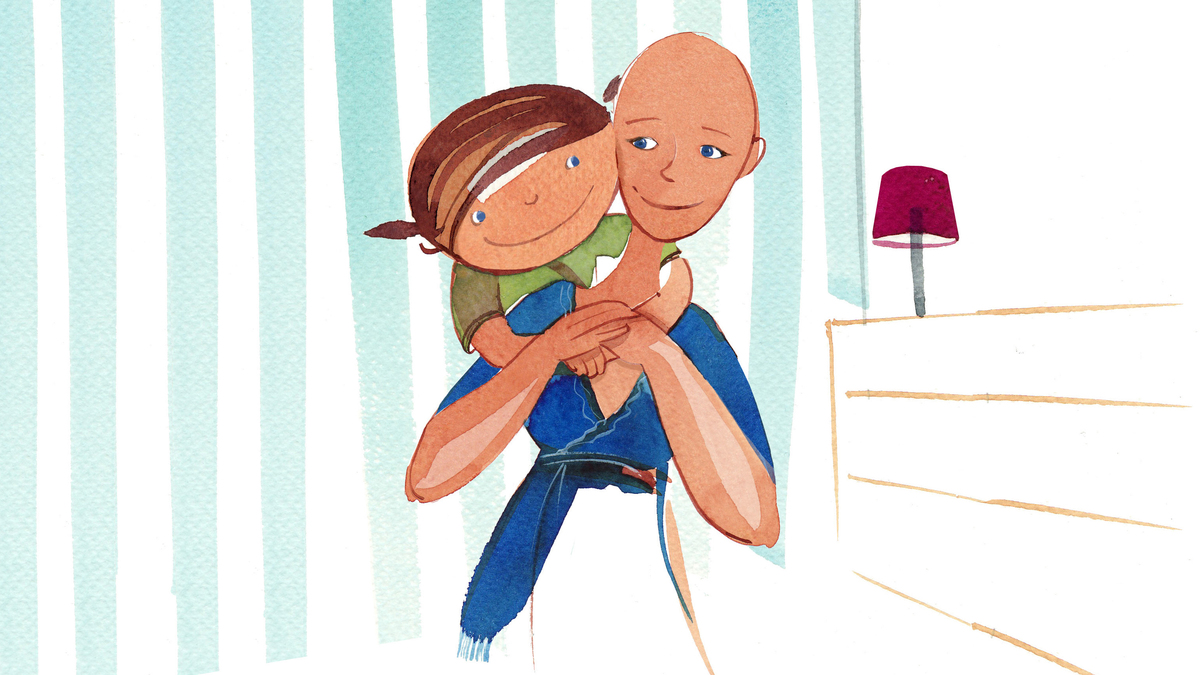
But if a book for small children is too depressing, some adults just won't buy it. When Sue Glader was diagnosed with breast cancer, she went looking for books to read to her nieces and nephews. "I saw a lot of things that were really very sad and very scary or supertechnical for a young child," she says. So when she was going through chemotherapy, she wrote the book Nowhere Hair:

"A sparrow might have borrowed it to warm her fancy nest.
Perhaps she stuffed a pillow to help grandma get some rest.
The day I asked her where it went
She had a simple answer
'I'm bald because of medicine
I take to cure my cancer."

Glader's advice for talking to kids about hard subjects is be "silly ... in the right places."

Sculpting And Touching Tragedy

As hard as it might be to talk to a child about cancer, it's still a relatively concrete and present subject. Talking about difficult issues in the news is a different challenge. When it's the so-called "crime of crimes," many adults would rather not think about it at all, let alone talk about it with kids.

Artist and activist Naomi Natale is trying to get young people, as well as grown-ups, to understand genocide with a project called One Million Bones.

Pre-K through 12th-grade students at several hundred schools around the country have been sculpting human bones out of clay for a mass grave to be displayed on the National Mall to honor the victims of genocide.

At Georgetown Day Middle School in Washington, D.C., 12-year-old Cole Wright-Schaner made a spine. "It was kind of disturbing to make it, thinking of all the people that have died in the African countries," he says. "It really opened my eyes to genocide and what's going on in the world. We live in such a safe country."

Natale says the simple, physical process of making a bone is what makes genocide personal. "If you can think about the bone that's in your hand, and that you're using your hands to craft another bone, you know — representative of our lives and evidence we existed," she says.

Life-size wax figures at the National Great Blacks in Wax Museum depict the grim realities of slavery. i

Life-size wax figures at the National Great Blacks in Wax Museum depict the grim realities of slavery. Courtesy Great Blacks In Wax Museum hide caption

itoggle caption Courtesy Great Blacks In Wax Museum
Life-size wax figures at the National Great Blacks in Wax Museum depict the grim realities of slavery.

Life-size wax figures at the National Great Blacks in Wax Museum depict the grim realities of slavery.

Courtesy Great Blacks In Wax Museum

And young people can comprehend a difficult subject better by seeing it or touching it. At the National Great Blacks in Wax Museum in Baltimore, they get to do both.

Joanne Martin founded the museum with her late husband, Elmer Martin. They assembled an exhibition on slavery that is both extraordinary and grim: The museum has actual slave chains and shackles that visitors can hold. The weight alone drives home the brutality of slavery.

There's also a replica of a slave ship. Narrow, creaky steps take visitors down below. It's dark and there are life-sized statues of men, women and children with chains and shackles around their legs and their necks.

On a recent trip to the museum, fifth-grade teacher Damien Samuels said his students from KIPP Middle School in Charlotte, N.C., were "significantly affected" by the slave ship. He says teaching the complete story of slavery is challenging. It's easy to find stories about escaping slavery and abolitionists but most media skirt the really difficult parts.

"Even the textbooks shy away from certain images," Samuels says. "I think this museum does a very good job at showing the graphic details. So I think this is a very, very good opportunity for [the students] to really, really appreciate what their ancestors have been through."

The Great Blacks in Wax Museum also includes many stories that celebrate African-Americans' achievements over the decades, from civil rights to space exploration to the White House. Leaving young people with a sense of hope is important whenever media tackle hard subjects, says Nickelodeon's Linda Ellerbee.

"Wherever bad things happen, you always find good people trying to make it better," she says. "And there are more good people than there are bad people."

post from sitemap

What Kids Are Reading, In School And Out

A group of young adults reading i
iStockphoto.com
A group of young adults reading
iStockphoto.com

Walk into any bookstore or library, and you'll find shelves and shelves of hugely popular novels and book series for kids. But research shows that as young readers get older, they are not moving to more complex books. High-schoolers are reading books written for younger kids, and teachers aren't assigning difficult classics as much as they once did.

At Woodrow Wilson High School in Washington, D.C., the 11th-grade honors English students are reading The Kite Runner. And students like Megan Bell are reading some heavy-duty books in their spare time. "I like a lot of like old-fashioned historical dramas," Bell says. "Like I just read Anna Karenina ... I plowed through it, and it was a really good book."

But most teens are not forging their way through Russian literature, says Walter Dean Myers, who is currently serving as National Ambassador for Young People's Literature. A popular author of young-adult novels that are often set in the inner city, Myers wants his readers to see themselves in his books. But sometimes, he's surprised by his own fan mail.

"I'm glad they wrote," he says, "but it is not very heartening to see what they are reading as juniors and seniors." Asked what exactly is discouraging, Myers says that these juniors and seniors are reading books that he wrote with fifth- and sixth-graders in mind.

And a lot of the kids who like to read in their spare time are more likely to be reading the latest vampire novel than the classics, says Anita Silvey, author of 500 Great Books for Teens. Silvey teaches graduate students in a children's literature program, and at the beginning of the class, she asked her students — who grew up in the age of Harry Potter — about the books they like.

"Every single person in the class said, 'I don't like realism, I don't like historical fiction. What I like is fantasy, science fiction, horror and fairy tales.' "

Those anecdotal observations are reflected in a study of kids' reading habits by Renaissance Learning. For the fifth year in a row, the educational company used its Accelerated Reader program to track what kids are reading in grades one through 12.

"Last year, we had more than 8.6 million students from across the country who read a total of 283 million books," says Eric Stickney, the educational research director for Renaissance Learning. Students participate in the Accelerated Reader program through their schools. When they read a book, they take a brief comprehension quiz, and the book is then recorded in the system. The books are assigned a grade level based on vocabulary and sentence complexity.

And Stickney says that after the late part of middle school, students generally don't continue to increase the difficulty levels of the books they read.

Last year, almost all of the top 40 books read in grades nine through 12 were well below grade level. The most popular books, the three books in The Hunger Games series, were assessed to be at the fifth-grade level.

Last year, for the first time, Renaissance did a separate study to find out what books were being assigned to high school students. "The complexity of texts students are being assigned to read," Stickney says, "has declined by about three grade levels over the past 100 years. A century ago, students were being assigned books with the complexity of around the ninth- or 10th-grade level. But in 2012, the average was around the sixth-grade level."

Most of the assigned books are novels, like To Kill a Mockingbird, Of Mice and Men or Animal Farm. Students even read recent works like The Help and The Notebook. But in 1989, high school students were being assigned works by Sophocles, Shakespeare, Dickens, George Bernard Shaw, Emily Bronte and Edith Wharton.

Now, with the exception of Shakespeare, most classics have dropped off the list.

Back at Woodrow Wilson High School, at a 10th-grade English class — regular, not honors — students say they don't read much outside of school. But Tyler Jefferson and Adriel Miller are eager to talk. Adriel likes books about sports; Tyler likes history. Both say their teachers have assigned books they would not have chosen on their own. "I read The Odyssey, Tyler says. "I read Romeo and Juliet. I didn't read Hamlet. Asked what he thought of the books, Tyler acknowledges some challenges. "It was very different, because how the language was back then, the dialogue that they had.

Adriel agrees that books like that are tougher to read. "That's why we have great teachers that actually make us understand," he says. "It's a harder challenge of our brain, you know; it's a challenge."

But a challenge with its rewards, as Tyler says. "It gives us a new view on things."

Sandra Stotsky would be heartened to hear that. Professor emerita of education at the University of Arkansas, Stotsky firmly believes that high school students should be reading challenging fiction to get ready for the reading they'll do in college. "You wouldn't find words like 'malevolent,' 'malicious' or 'incorrigible' in science or history materials," she says, stressing the importance of literature. Stotsky says in the '60s and '70s, schools began introducing more accessible books in order to motivate kids to read. That trend has continued, and the result is that kids get stuck at a low level of reading.

"Kids were never pulled out of that particular mode in order to realize that in order to read more difficult works, you really have to work at it a little bit more," she says. "You've got to broaden your vocabulary. You may have to use a dictionary occasionally. You've got to do a lot more reading altogether."

"There's something wonderful about the language, the thinking, the intelligence of the classics," says Anita Silvey. She acknowledges that schools and parents may need to work a little harder to get kids to read the classics these days, but that doesn't mean kids shouldn't continue to read the popular contemporary novels they love. Both have value: "There's an emotional, psychological attraction to books for readers. And I think some of, particularly, these dark, dystopic novels that predict a future where in fact the teenager is going to have to find the answers, I think these are very compelling reads for these young people right now."

Reading leads to reading, says Silvey. It's when kids stop reading, or never get started in the first place, that there's no chance of ever getting them hooked on more complex books.

post from sitemap

Monday, March 30, 2015

Study Finds Parents Low-Ball Obese Children’s Weight

A new study has found that parents of obese children may not be able to recognize their child is overweight, unless they are at very extreme levels of obesity.

Researchers from the London School of Hygiene & Tropical Medicine and University College of London (UCL) Institute of Child Health, a research partner of Great Ormond Street Hospital, also found that parents are more likely to underestimate their child’s weight if they are black or South Asian, from more deprived backgrounds, or if their child is male.

As childhood obesity has increased in the UK, the government has put in place interventions to tackle the problem, the researchers noted. But it was suggested that many parents can’t identify when their child is overweight, leading to questions about the effectiveness of current interventions designed to address obesity in the home.

The research team set out to look at this problem and identify socioeconomic factors that may predict a parent’s inability to estimate their child’s weight correctly.

Questionnaires were filled out by the parents of 2,976 children in five primary care trusts taking part in the National Child Measurement Program: Redbridge, Islington, West Essex, Bath and North East Somerset, and Sandwell.

The researchers discovered that 31 percent of parents (915) underestimated where their child’s Body Mass Index (BMI) sat on government obesity scales, which classify children as very overweight (or obese), overweight, healthy weight, or underweight.

In fact, the researchers report they found only four parents described their child as being very overweight despite 369 children being officially identified as very overweight according to the BMI cut-off.

According to official guidelines, children are classified as overweight at the 85th centile and very overweight (or obese) at the 95th centile. The researchers found that for a child with a BMI at the 98th centile there was an 80 percent chance the parent would classify their child as healthy weight. Parents did become more likely to classify their child as overweight when the child had a BMI above the 99.7th centile, the researchers found.

“If parents are unable to accurately classify their own child’s weight, they may not be willing or motivated to enact the changes to the child’s environment that promote healthy weight maintenance,” said senior author Dr. Sanjay Kinra, a reader in Clinical Epidemiology at the London School of Hygiene & Tropical Medicine and co-lead investigator of the PROMISE trial.

Co-author Professor Russell Viner, academic pediatrician at the UCL institute of Child Health and PROMISE co-lead investigator added: “Measures that decrease the gap between parental perceptions of child weight status and obesity scales used by medical professionals may now be needed in order to help parents better understand the health risks associated with overweight and increase uptake of healthier lifestyles.”

The study, published in the , is part of the PROMISE (Pediatric Research In Obesity Multi-Modal Intervention And Service Evaluation) study, a five-part project that aims to improve the assessment and treatment of childhood obesity through research.

Source:

Wood, J. (2015). Study Finds Parents Low-Ball Obese Children’s Weight. . Retrieved on March 30, 2015, from http://psychcentral.com/news/2015/03/29/study-finds-parents-underestimate-obese-childrens-weight/82865.html
post from sitemap

Saturday, March 28, 2015

Why We Love Comfort Food

What is your comfort food? Macaroni and cheese? A turkey sandwich? Whatever it is, there’s a good chance that your attraction to that dish is based on having a good relationship with the person who first prepared it for you, according to new findings from a study at the University at Buffalo (UB).

Comfort food is defined as the food one eats to elicit comforting feelings. For some of the study participants, comfort food was a healthy food choice, for others, it was starchy and fatty.

“For a lot of people it is the food they grew up eating,” said UB psychologist Dr. Shira Gabriel. “In a previous study, we gave all of the participants chicken noodle soup, but only those who had a social connection to that soup identified it as a comfort food and felt socially accepted after eating it.

“Comfort foods are often the foods that our caregivers gave us when we were children. As long as we have positive association with the person who made that food then there’s a good chance that you will be drawn to that food during times of rejection or isolation,” said Gabriel. “It can be understood as straight-up classical conditioning.”

The study sheds new light on the link between social experiences and our food preferences and eating behaviors. While previous research has shown that comfort food can reduce feelings of rejection and isolation, the new study explores why certain foods are attractive to us when we are feeling down.

“Because comfort food has a social function,” Gabriel said, “it is especially appealing to us when we are feeling lonely or rejected. The current study helps us understand why we might be eating comfort foods even when we’re dieting or not particularly hungry.”

Having a threatened sense of belonging is related to mental and physical health risks, say the researchers, and it’s important to learn how that vulnerability can be managed. The findings offer insights into why so many people turn to comfort food in order to feel socially connected and safe.

However, turning to food to fill one’s social needs is not without risks. As Gabriel said, “Although comfort food will never break your heart, it might destroy your diet.”

The study is published in the journal .

Source:

Pedersen, T. (2015). Why We Love Comfort Food. . Retrieved on March 28, 2015, from http://psychcentral.com/news/2015/03/28/why-we-love-comfort-food/82905.html
post from sitemap

Thursday, March 26, 2015

‘Bystander Effect’ Evident in Young Kids

As young as five years old, children begin to show the “bystander effect,” meaning that they are less likely to help a person in need when there are other children available to help, according to a new study published in the journal .

Children are quick to help, however, when they realize they are the only one available.

“The children in our study helped at very high levels only when responsibility was clearly attributable to them,” said psychological scientist and lead researcher Dr. Maria Plötner of the Max Planck Institute for Evolutionary Anthropology in Leipzig, Germany.

“These findings suggest that children at this age take responsibility into account when deciding whether to help.”

Earlier research has shown that children are generally very helpful, but the new study is one of the first to specifically investigate whether the presence of other children affects this helping behavior.

For the study, researchers recruited 60 children at the age of five to participate in the study, with their parents’ permission. The children were told that they could choose a picture to color. Some children colored with only the researcher in the room, while others colored alongside two other children.

Unbeknownst to the participants, the two other children were actually part of the experiment and were instructed by the researchers to role play according to a script.

Before the children began coloring, the researcher noticed a water puddle and wiped it up with paper towels. She left the remaining paper towels on the floor, just “in case something needs to be wiped up later.”

A little while later, the researcher “accidentally” knocked over her cup of colored water. She tried to hold the water back with her arms and, after about 15 seconds, she looked at the water, said “Oops,” and groaned.

She made increasingly more obvious displays of distress and, eventually, if no one had helped her, she asked the children to bring her the paper towels. And if no one helped after 90 seconds, the researcher retrieved the paper towels herself.

According to the findings, when other children were present and available to help, participants were less inclined to retrieve the paper towels for the researcher. If the other children were unavailable for helping (because their path to the researcher was obstructed), however, the participants were just as likely to retrieve the paper towels as those who were alone with the researcher. Participants who were alone with the researcher in the room were faster to help than those who were in the room with other children.

In post-experiment interviews, participants revealed that they had recognized that the researcher needed help; therefore, awareness of the problem could not explain the difference in behavior.

Interestingly, far fewer children said that it was their responsibility to help the researcher if there had been other children in the room to help.

“This study shows that although children are typically extremely helpful, this tendency to help can be overridden in certain circumstances,” said Plötner.

Together, the findings “illustrate the surprising complexity of young children’s helping behavior by demonstrating that when others are present, children will help more in some circumstances and less in others,” said Plötner.

The findings show that the bystander effect — a social phenomenon so prominent in adults — is evident in children as young as five years old, suggesting that it is a strong behavioral response that emerges early in life.

The researchers believe it would be helpful if interventions designed to encourage prosocial, helping behavior in children included the issue of diffusion of responsibility.

Source:

Pedersen, T. (2015). ‘Bystander Effect’ Evident in Young Kids. . Retrieved on March 27, 2015, from http://psychcentral.com/news/2015/03/26/bystander-effect-evident-in-young-kids/82795.html
post from sitemap

Do More Academic Challenges = Higher IQ?

The argument on the role of nature (genetics) verse nurture (environment) for influencing a person’s intelligence has taken a new chapter.

Pennsylvania State University researchers believe more schooling — and the more mentally challenging problems tackled in those schools — may be the best explanation for the dramatic IQ escalation experienced over the last century.

The rise in IQ scores is often referred to as the Flynn Effect, and suggests that environment may have a stronger influence on intelligence than many genetic determinists once thought.

Researchers have struggled to explain why IQ scores for developed nations — and, now, developing nations — have increased so rapidly during the 20th century, said Dr. David Baker, professor of sociology and education at Penn State.

Mean IQ test scores of American adults, for instance, have increased by about 25 points over the last 90 years.

“There’ve been a lot of hypotheses put forward for the cause of the Flynn Effect, such as genetics and nutrition, but they generally fall flat,” said Baker.

“It really begged the question of whether an environmental factor, or factors, could cause these gains in IQ scores.”

School enrollment in the United States reached almost 90 percent by 1960.

However, as reported in current issue of , researchers believe that it is not just increasing attendance, but also the more challenging learning environment that are reasons behind the IQ score rise.

“If you look at a chart of the Flynn Effect over the 20th century in the United States, for example, you notice that the proportion of children and youth attending school and how long they attend lines up nicely with the gains in IQ scores,” said Baker.

“As people went to school, what they did there likely had a profound influence on brain development and thinking skills, beyond just learning the three R’s. This is what our neurological and cognitive research shows.”

He added that over the century, as a higher percentage of children from each new generation went to school and attended for more years, this produced rising IQ scores.

“Even after full enrollments were achieved in the U.S. by about the 1960s, school continued to intensify its influence on thinking,” said Baker.

While even basic schooling activities can shape brain development, over the past century, schools have moved from learning focused on memorization to lessons that require problem solving and abstract thinking skills, which are often considered functions of fluid intelligence, Baker said.

Researchers believe the common perception that academic curriculum’s have become easier leading to a general ‘dumbing’ down of schools, is mistaken.

“This misperception has tended to lead cognitive scientists away from considering the impact of schooling and its spread over time as a main social environment in neurological development,” said Baker.

Investigators suggest the ongoing academic challenges have built up students’ mental muscles in a similar fashion to how physical resistance training can lead to muscular hypertrophy.

Baker believes the academic training allows students to perform better on certain types of problems that require flexible thinking and abstract problem solving, such as IQ tests.

“Certain kinds of activities — like solving problems, or reading — stimulate the parts of the brain that we know are responsible for fluid intelligence,” said Baker.

“And these types of activities are done over and over in today’s schools, so that you would expect these students to have higher development than populations of people who had no access to schooling.”

Students must not only solve more challenging problems, they must use multiple strategies to find solutions, which adds to the mental workout in today’s schools, according to Baker.

The researchers conducted three studies, from neurological, cognitive, and demographic perspectives, according to Baker.

He said that genetics alone could not explain the Flynn Effect. Natural selection happens too slowly to be the sole reason for rising IQ scores. This suggests that intelligence is a combination of both genetics and environment.

“The best neuroscience is now arguing that brains of mammals, including, of course, humans, develop in this heavy genetic-environmental dependent way, so it’s not an either-or situation,” said Baker.

“There’s a high genetic component, just like there is for athletic ability, but the environment can enhance people’s abilities up to unknown genetic limits.”

In the first study, the researchers used functional magnetic resonance imaging to measure brain activity in children solving certain math problems. They found that problems typical of today’s schooling activated areas of the brain known as centers of fluid intelligence, for instance, mathematical problem solving.

A field study was also conducted in farming communities in Peru where education has only recently become fully accessible. The survey showed that schooling was a significant influence on improved cognitive functioning.

To measure the challenge level of lessons, the researchers analyzed more than 28,000 pages of content in textbooks published from 1930 to 2000. They measured, for example, whether students were required to learn multiple strategies to find solutions or needed other mental skills to solve problems.

Source:

Nauert, R. (2015). Do More Academic Challenges = Higher IQ?. . Retrieved on March 27, 2015, from http://psychcentral.com/news/2015/03/26/do-more-academic-challenges-higher-iq/82801.html
post from sitemap

Wednesday, March 25, 2015

Home Environment Packs Big Impact on Kids’ IQ

A new study suggests a nurturing environment plays a strong role in enhancing a child’s intelligence.

Researchers from Virginia Commonwealth University (VCU), the University of Virginia, and Lund University in Sweden discovered that young adults who were raised in educated households develop higher cognitive ability than those who were brought up in less ideal environments.

While the study does not contest previous findings that DNA impacts intelligence, it does prove that environmental influences play a significant role in cognitive ability as measured in early adulthood.

Researchers compared the cognitive ability — as measured by IQ — of 436 Swedish male siblings in which one member was reared by biological parents and the other by adoptive parents.

The IQ of the adopted males, which was measured at ages 18-20, was 4.4 points higher than their nonadopted siblings.

The findings have been published online in the Early Edition of the .

“In Sweden, as in most Western countries, there is a substantial excess of individuals who wish to adopt compared to adoptive children available,” said joint first author Kenneth S. Kendler, M.D., professor of psychiatry and human and molecular genetics, VCU School of Medicine.

“Therefore, adoption agencies see it as their goal of selecting relatively ideal environments within which to place adoptive children.”

The adoptive parents tended to be more educated and in better socioeconomic circumstances than the biological parents.

In the study, parental education level was rated on a five-point scale and each additional unit of rearing parental education was associated with 1.71 more units of IQ.

In the rare circumstances when the biological parents were more educated than the adoptive parents, the cognitive ability of the adopted away offspring was lower than the one who was reared by the genetic parents.

“Many studies of environmental effects on cognitive ability are based on special programs like Head Start that children are placed in for a limited amount of time,” said joint-first author Eric Turkheimer, Ph.D., a professor of psychology at the University of Virginia.

“These programs often have positive results while the program is in place, but they fade quickly when it is over. Adoption into a more educated household is the most permanent kind of environmental change, and it has the most lasting effects.”

Investigators share that previous studies have found that educated parents are more likely to talk at the dinner table, take their children to museums, and read stories to their children at night.

“We’re not denying that cognitive ability has important genetic components, but it is a naïve idea to say that it is only genes,” Kendler said.

“This is strong evidence that educated parents do something with their kid that makes them smarter and this is not a result of genetic factors.”

Social status and the social environment also play a factor in IQ development — a concept proved in a landmark 2003 study by Turkheimer. In that study, he demonstrated that the effect of genes on IQ depends on socioeconomic status.

The most recent study further affirms that finding.

“Differences among people in their cognitive ability are influenced by both their genes and environments, but genetic effects have often been easier to demonstrate because identical twins are essentially clones and have highly similar IQs,” Turkheimer said.

“Environmental effects have to be inferred, as in the rare event when pairs of siblings are raised by different parents in different socioeconomic circumstances. The Swedish population data allowed us to find that homes led by better educated parents produce real gains in the cognitive abilities of the children they raise.”

Source:

Nauert, R. (2015). Home Environment Packs Big Impact on Kids’ IQ. . Retrieved on March 25, 2015, from http://psychcentral.com/news/2015/03/25/home-environment-packs-big-impact-on-kids-iq/82756.html
post from sitemap

Monday, March 23, 2015

Perceptions Harm Anorexic Men

Recent findings suggest that the perception of eating disorders as a female problem may be preventing boys and men from seeking help.

About one in eight people with anorexia nervosa is male. This equates to one in 2,000 men, compared with one in 250 women.

Anorexia is one of the four recognized types of eating disorders, with the others being bulimia nervosa, binge eating disorder, and eating disorder not otherwise specified (EDNOS). It has the highest mortality rate of all adolescent psychiatric conditions.

Rates among men are rising, but there is often poor recognition of the signs and symptoms of eating disorders in men, said Dr. Ulla Raisanen of Oxford University, U.K., and her team. As such, true rates may be higher than the official estimates. Some studies suggest that men with anorexia are more likely to engage in obsessive exercise and have more severe psychiatric problems as a result of the condition.

The team interviewed 39 young people aged 16 to 25 with an eating disorder. Of the interviewees, 10 were men. The male respondents had all been slow to realize that they had the potential signs and symptoms of an eating disorder. Crucially, behaviors such as going days without eating, purging, obsessive calorie-counting, exercise, and weighing became entrenched during this time.

Some cited the perception that eating disorders are a women’s problem as one of the main reasons why it took them so long to realize. One said he thought eating disorders only affected “fragile teenage girls”, and another said he thought these disorders were “something girls got”.

The eating disorder often went unrecognized by friends, family, and teachers, and was often only diagnosed at a crisis point such as being admitted to hospital for self-harming.

The study is published in the journal . The authors write, “Our findings suggest that men may experience particular problems in recognizing that they may have an eating disorder as a result of the continuing cultural construction of eating disorders as uniquely or predominantly a female problem.”

The team also reports that men’s experiences of the health care system were mixed. “They said they often had to wait a long time for specialist referral and had sometimes been misdiagnosed, or, as in one case, told by the doctor ‘to man up.’ They complained of insufficient information about eating disorders targeted specifically at men,” they write.

One participant was given information and advice, but still felt that “I don’t think there’s any real information out there particular for men or any even awareness that it exists.”

The men expressed a strong desire for balanced, gender-tailored information. They felt that gender-blind information reflected wider societal constructions of anorexia as predominantly or only affecting women.

A lack of understanding and training among health professionals may also contribute to delays in diagnosing and treating anorexia among men, in part because men with anorexia might account for symptoms regarding weight and dieting behaviors differently from female sufferers. For example, “unusual behaviors could be misinterpreted as personal choices,” they explain.

But they point out that the study is limited to young people, so does not contribute to an understanding of older people with eating disorders.

“Men with eating disorders are under-diagnosed, under-treated, and under-researched. In order to improve the outlook for men with eating disorders, early detection is imperative,” they state.

Early diagnosis and intervention for anorexia has been shown to prevent the development of long-term, potentially life-threatening, psychiatric issues. Treatment can include psychological and drug interventions as well as dietary advice, but early diagnosis and intervention is important for long-term outcomes.

Another recent study indicated that treatment outcomes in all eating disorders are better for men than women, when remission was measured by a return to healthy weight and relapsing.

“In order to improve prognosis for men with eating disorders, early detection is imperative,” the team writes.

“Primary care clinicians have a key role in recognizing early symptoms. Until information resources are made more appropriate for men with eating disorders, health care providers need to be particularly sensitive to men’s needs in relation to an illness so strongly associated with women.

“Raising awareness of eating disorders more widely in society is also crucial to help men (and women) to recognize and seek help before their symptoms and behaviors become intractable.

“It is important to decouple the experience and self-management of eating disorders from feminized cultural imagery, resources, and clinical practice if we wish to prevent men from dismissing signs and symptoms themselves, and prevent health and other professionals (e.g. teachers) from overlooking signs and symptoms in boys and young men that they may readily recognize as indicative of eating disorders in young women.”

Raisanen, U., & Hunt, K. The role of gendered constructions of eating disorders in delayed help-seeking men: a qualitative interview study. , 9 April 2014 doi: 10.1136/bmjopen-2013-004342

Collingwood, J. (2015). Perceptions Harm Anorexic Men. . Retrieved on March 24, 2015, from http://psychcentral.com/news/2015/03/23/perceptions-harm-anorexic-men/82671.html
post from sitemap

Autism Tied to Multiple Births After Fertility Treatments

A new paper reports the incidence of diagnosed autism was twice as high for assisted reproductive technology (ART) as non-ART births in a California study.

ART includes a group of complex procedures that are often utilized if a woman does not become pregnant after treatment with medical and surgical techniques. Techniques include intrauterine insemination (IUI), in vitro fertilization and third party assisted ART.

The new study reviewed nearly six million children born in California from 1997 through 2007.

Researchers report, however, that much of the association between ART and autism can be explained by age and education of the mother as well as adverse perinatal outcomes, especially multiple births. After accounting for these factors, the study showed an elevated risk only for mothers ages 20-34.

Notably, the study reported no significant increased risk of autism for women who gave birth to singleton children.

“These results indicate that the higher autism risk may be due mainly to the large numbers of multiple births and complications of pregnancy and delivery among children conceived with ART,” said Dr. Christine Fountain, assistant professor of sociology at Fordham University and affiliated researcher at Columbia University.

Autism impairs social interaction and predisposes children to restrictive and repetitive behaviors. Over the past three decades, California has witnessed a very large spike in autism cases, as have many other areas of the United States.

The study, a large collaboration between researchers at Columbia University, Fordham University, and the Centers for Disease Control and Prevention, was published by the .

The study was based on a massive linkage of different kinds of records from the California Birth Master Files for 1997 through 2007, the California Department of Developmental Services autism caseload for 1997 through 2011, and the Centers for Disease Control and Prevention’s National ART Surveillance System for live births in 1997 through 2007.

In sum, information about all of the 5,926,251 live births, including 48,865 infants conceived with ART and 32,922 cases of autism diagnosed by the Department of Developmental Services were involved in the study which compared births originated using ART with births originated without ART for incidence of autism diagnosis.

“This study of the relationship between ART and autism is the largest to date,” said Dmitry Kissin, M.D., M.P.H., health scientist in CDC’s Division of Reproductive Health.

“The results indicate that reducing multiple births during ART may be beneficial for decreasing the risk of autism.”

Dr. Peter Bearman, Cole Professor of the Social Sciences and the lead investigator at Columbia University said, “While the risk of ART with respect to autism appears to be largely modifiable by restricting the procedure to single-embryo transfer, more research is needed to understand the precise mechanisms by which ART and autism are linked.”

Source:

Nauert, R. (2015). Autism Tied to Multiple Births After Fertility Treatments. . Retrieved on March 23, 2015, from http://psychcentral.com/news/2015/03/23/autism-associated-with-multiple-births-after-aggressive-fertility-efforts/82663.html
post from sitemap

Sunday, March 22, 2015

Study Finds Boys More Affected by Sexual Music Videos

A new study has found unexpected gender differences among teenagers who watch music videos on television.

The study, conducted at the Catholic University of Leuven in Belgium, found that sexually active youth of both genders think their peers are also sexually active after watching music TV.

But the study also found that when girls and boys perceive males in music videos as being sexually active, it makes boys watch more music TV, and girls watch less.

The study, published in Springer’s journal , notes that watching music videos is a popular pastime of European and American teenagers. The videos, however, are often criticized for having too much sexual content, for objectifying women and for promoting a recreational view of sexual activities. They also have been linked to teenagers becoming sexually active earlier in life, according to the researchers.

For their study, researchers gathered information three times over the course of a year from 515 Belgian teenagers between the ages of 12 and 15. The kids were asked how much music television they watched, how sexually active they were, and how sexually active they thought their peers were.

The researchers found that watching sexual music videos only had an effect on the sexual behavior of teenage boys, but not girls. They said they believe this behavior is influenced by the sexual scripts of music videos, which tend to show men taking a more active role in any sexual interaction.

Watching music videos definitely had an influence on how sexually active boys and girls thought peers of the same sex were, the researchers reported. It made them believe that many of their friends were also sexually active — even though this might not be true.

This, in turn, made the boys watch even more of this kind of television, according to the study’s findings. Girls, on the other hand, stopped watching this kind of television.

The researchers speculate that this might be a type of defense reaction on the part of girls who believe that many male peers are sexually active. The girls also may be rejecting media content that tends to portray girls as sexual objects, the researchers hypothesized.

“Regarding the influence of music television exposure on sexual behavior, our findings suggest that increased sexual activities may be triggered by media use among boys, but not among girls,” said co-author Eline Frison.

“As the portrayal of women as objects of lust reflects patriarchal values, media images that support this type of male dominance may provoke resistance in female viewers. This is especially valid among those who view such activity as a threat because of the high sexual activity rates of male peers.”

Source:

Wood, J. (2015). Study Finds Boys More Affected by Sexual Music Videos. . Retrieved on March 22, 2015, from http://psychcentral.com/news/2015/03/22/study-finds-boys-more-affected-by-sexual-music-videos/82589.html
post from sitemap

Saturday, March 21, 2015

Age in Kindergarten Tied to Later Dropping Out, Crime

A new study has found that students who are older when they start kindergarten are more likely to drop out of school and commit serious crimes as teenagers.

Additionally, this negative outcome is significantly more likely for children from disadvantaged backgrounds, according to a researcher from Duke University.

“This research provides the first compelling evidence of a causal link between dropout and crime. It supports the view that crime outcomes should be considered in evaluating school reforms,” said lead author Dr. Philip J. Cook, a professor in Duke’s Sanford School of Public Policy.

“Dropouts are greatly over-represented in prison, so we know there is a strong association between dropping out and crime,” he continued.

“But to establish causation requires an experiment. My analysis takes advantage of nature’s experiment associated with birth date.”

The study compared North Carolina public school students born 60 days before and 60 days after the school cutoff date. At the time of the study, North Carolina children had to turn five by Oct. 16 to be eligible to enter kindergarten that year, according to the researchers.

Previous studies have established that children born just after the school-entry cutoff date, who enter school “old for grade,” perform better academically than their younger classmates.

As a result, a growing number of parents have delayed enrolling their children whose birthdays fall shortly before the cutoff date, seeking to gain academic and social advantages, the researcher notes. Known as “academic redshirting,” this delay is more common for boys than girls and for whites than African-Americans.

In addition to performing better academically, Cook’s study found old-for-grade students were one-third less likely to engage in delinquent behavior while still in school.

“Up until the 16th birthday, it is all positive,” Cook said. “They are doing better, relative to their classmates, by every measure. It makes sense, because they are more mature.”

But after age 16, the picture shifts, according to Cook’s research. The old-for-grade students are more likely to drop out and be convicted of a felony before age 20.

The explanation for the seeming contradiction lies in the age at which students may legally withdraw from school, which is 16 in North Carolina, he noted.

“If they were born before the cutoff date, they have just 19 months between their 16th birthday and graduation to be tempted to drop out,” Cook said. “If they were born just after and enter school later, they have 31 months, and for some of them, it is an irresistible temptation.”

“It’s human nature,” he added. “For a lot of adolescents, high school is a drag.”

Among the old-for-grade students, the likelihood of dropping out and being convicted of a serious crime is 3.4 times greater for those born to an unwed mother and 2.7 times greater for those whose mothers were high school dropouts, according to the study’s findings.

Policymakers should take notice, Cook said.

“Even something as crude as a regulation that requires a kid stay in school to a fixed age, whether he wants to or not, has a considerable effect on criminal activity,” he said.

Rather than tie when kids can drop out to an age, states might consider requiring completion of a certain grade or a specified number of years in school, he said.

“People say there is no point keeping a kid in school who doesn’t want to be there because he won’t learn anything and he’ll be disruptive,” Cook said. “My findings suggest that intuitive argument is not entirely correct.”

“Even students who would rather drop out can benefit from staying in school when they are required to do so,” he concluded. “Otherwise they are prime candidates for recruitment into a life of crime.”

The study was published in the .

Source:

Wood, J. (2015). Age in Kindergarten Tied to Later Dropping Out, Crime. . Retrieved on March 22, 2015, from http://psychcentral.com/news/2015/03/21/age-in-kindergarten-tied-to-later-dropping-out-crime/82593.html
post from sitemap

Thursday, March 19, 2015

Good Breakfast May Hike Low-Income Kids’ Grades

From an energy and dietary perspective breakfast has often been touted as the most important meal of the day.

New research suggests the benefits of a good breakfast extend to the cognitive arena as investigators find a strong connection between good nutrition and good grades.

In the study, University of Iowa investigators discovered free school breakfasts help students from low-income families perform better academically.

Researchers found students who attend schools that participate in the U.S. Department of Agriculture’s School Breakfast Program (SBP) have higher achievement scores in math, science, and reading than students in schools that don’t participate.

“These results suggest that the persistent exposure to the relatively more nutritious breakfast offered through the subsidized breakfast program throughout elementary school can yield important gains in achievement,” said researcher Dr. David Frisvold, an assistant professor of economics.

The federal government started the SBP for children from low-income families in 1966. The program is administered in coordination with state governments, many of which require local school districts to offer subsidized breakfasts if a certain percentage of their overall enrollment comes from families that meet income eligibility guidelines.

Frisvold conducted his study by examining academic performance from students in schools that are just below the threshold and thus not required to offer free breakfasts, and those that are just over it and do offer them.

He found the schools that offered free breakfasts showed significantly better academic performance than schools that did not, and that the impact was cumulative so that the longer the school participated in the SBP, the higher their achievement.

Math scores were about 25 percent higher at participating schools during a students’ elementary school tenure than would be expected otherwise. Reading and science scores showed similar gains, Frisvold said.

Frisvold said the study suggests subsidized breakfast programs are an effective tool to help elementary school students from low-income families achieve more in school and be better prepared for later life.

Source:

Nauert, R. (2015). Good Breakfast May Hike Low-Income Kids’ Grades. . Retrieved on March 19, 2015, from http://psychcentral.com/news/2015/03/18/good-breakfast-may-hike-low-income-kids-grades/82469.html
post from sitemap

Wednesday, March 18, 2015

On Social Media, Teens Take Risks First, Seek Help Later

Teens tend to approach privacy on social media in a significantly different way than adults, according to a new study. While most adults think first and then ask questions, teens tend to take the risk and then seek help.

Teens are typically exposed to greater online risks because they are using social media as a platform for self-expression and acceptance. They may disclose important contact information or photographs with strangers, for example.

“Adults don’t know how big of a deal this is for teens,” said Haiyan Jia, post-doctoral scholar in information sciences and technology.

“Before I worked on these papers, I was drawn to the issue because I heard about so many tragedies of teens who were exploring their identities online and that led them to very risky situations, often with terrible consequences.”

“Adults often find this very difficult to understand and paradoxical because they are so used to considering possible risks of disclosing information online first and then taking the necessary precautions, based on those concerns,” said Jia.

“What our model suggests is that teens don’t think this way — they disclose and then evaluate the consequences. The process is more experiential in nature for teens.”

The findings offer insight into what researchers call the ‘privacy paradox,’ notes Pamela Wisniewski, a post-doctoral scholar in information sciences and technology, who worked with Jia. She adds that the privacy paradox suggests that there is a disconnect between the privacy concerns of teens and what information they disclose.

“For adults, the basic model is that different factors contribute to an individual’s concern for his or her information privacy and based on that privacy concern the user takes certain actions, for example, disclosing less information,” said Wisniewski. “This is a very rational, adult-focused model, however, that doesn’t seem applicable to teens.”

When teens are faced with privacy concerns, they often try to find possible protective actions to diminish risk, according to the researchers. This includes seeking advice from adults, removing online information, or going offline completely.

A parent’s first impulse may be to take away access to the Internet or social media, but completely avoiding risks may cause other problems, said the researchers.

“First, I can’t imagine a teen growing up and avoiding the Internet and online communications in this age,” said Jia.

“But there’s also a danger that without taking on the minimum risks, teens will not have access to all the positive benefits the Internet can provide, nor will they learn how to manage risk and how to safely navigate this online world.”

Jia uses the concept of swimming lessons as the best model for parents who want to encourage their teens to use the Internet and social media safely. “It’s a lot like learning to swim,” Jia said.

“You make sure they enter the water slowly and make sure they know how to swim before you let them swim on their own and in the deeper parts.”

For the study, the researchers looked at data from the Pew Research Center’s 2012 Teens and Privacy Management Survey. The survey gathered information on social media behaviors from 588 teens in the United States, most of whom were active users of sites such as Facebook.

The researchers presented their findings at the Computer-Supported Cooperative Work and Social Computing conference.

Source:

Pedersen, T. (2015). On Social Media, Teens Take Risks First, Seek Help Later. . Retrieved on March 18, 2015, from http://psychcentral.com/news/2015/03/18/on-social-media-teens-take-risks-first-seek-help-later/82452.html
post from sitemap

Common IQ Methodology May Be Flawed

A Canadian researcher has discovered inconsistencies in the widely used Wechsler Adult Intelligence test (WAIS-IV).

Queen’s University professor Dr. Allyson Harrison and her colleagues examined the differences between Canadian and American WAIS-IV scores from 861 postsecondary students from across Ontario.

The research identified a trend where the individual’s scores were consistently lower using the Canadian test scoring system.

The discrepancy is alarming as the WAIS-IV is one of the most widely used intelligence tests in the world.

IQ scores are used to predict educational success, to help identify intellectual disabilities or intellectual giftedness, and to establish whether a person has a specific learning disability.

For her research, Harrison and colleagues examined the differences between Canadian and American WAIS-IV scores from 861 postsecondary students from across Ontario.

The WAIS-IV scores are used to make diagnostic decisions on the person’s ability relative to their peer group.

“Looking at the normal distribution of scores, you’d expect that only about five percent of the population should get an IQ score of 75 or less,” says Dr. Harrison.

“However, while this was true when we scored their tests using the American norms, our findings showed that 21 percent of college and university students in our sample had an IQ score this low when Canadian norms were used for scoring.”

The trend was the same across all IQ scores, with Canadian young adults in college or university consistently receiving a lower IQ score if the Canadian norms were used.

There were fewer gifted students identified when Canadian norms were used, as well as more students who were said to be intellectually impaired.

When scoring the WAIS-IV, Canadian psychologists have the option to compare the obtained raw score with the normative data gathered in either Canada or the U.S.

Harrison noted these findings have serious implications for educational and neuropsychological testing.

“Research shows that you can go from being classified as average to intellectually impaired based only on whether American or Canadian norms are used to rank the obtained raw IQ score.”

Source:

Nauert, R. (2015). Common IQ Methodology May Be Flawed. . Retrieved on March 18, 2015, from http://psychcentral.com/news/2015/03/18/common-iq-methodology-may-be-flawed/82459.html
post from sitemap

Tuesday, March 17, 2015

Depression in Transgender Youth Eases with Recognition, Treatment

Transgender youth often suffer from mental health problems, but a new study has found that their depression and anxiety improve greatly when their gender dysphoria is recognized and treated.

Gender dysphoria is a condition in which the child’s biological gender and the gender with which the child identifies do not match. Transgenderism is the persistent desire to change one’s biological gender.

“Many of our patients suffer greatly from bullying, discrimination, isolation, and lack of support or lack of insurance coverage for the necessary treatment,”  said principal investigator Maja Marinkovic, M.D., a pediatric endocrinologist and medical director of the Gender Management Clinic at Rady Children’s Hospital-San Diego, an affiliate of the University of California, San Diego.

“Youth with gender incongruence or dysphoria need a comprehensive, multidisciplinary approach to care. They are in great need of experienced endocrinologists, therapists, psychiatrists, primary care providers, and surgeons,” said Marinkovic.

The study, which took place at the Rady Children’s Hospital clinic, involved 42 patients with gender dysphoria. Twenty-eight participants were making a female-to-male transition, 13 were male-to-female and one natal girl was gender fluid. That patient reportedly later chose male hormone treatment.

Twenty-six (62 percent) reported that they had depression, anxiety or both and/or cut themselves, with seven patients having a self-cutting history, Marinkovic said. Eleven patients had additional psychiatric or behavioral problems, including attention-deficit/hyperactivity disorder, or ADHD, Asperger’s syndrome/autism spectrum disorder and bipolar disorder.

Often, noted Marinkovic, parents and school staff may not even think of transgenderism, and there is often a delay in having the child assessed by a therapist who is experienced in gender identity problems until much later, when the young person is already deeply depressed or suicidal.

Treatment involved administering gonadotropin-releasing hormone agonists (GnRHa), which Marinkovic described as “puberty blockers,” in seven patients and cross-gender hormones in 32 patients, with only two patients taking both types of hormones.

The average age of starting puberty suppression was 12.5 years, and treatment with cross-gender hormones began at an average age of 16.5 years. Two female-to-male patients had breasts surgically removed at ages 16 and 18 years, she reported. Several other participants wanted to get this type of surgery, but their insurance plans did not cover it or they could not find an experienced surgeon in their area.

“To date, none of the patients expressed regret or stopped therapy,” Marinkovic stated.

Mental health follow-up data were available for 22 out of 26 patients. After treatment, depression, anxiety and/or self-cutting improved in all but two of the participants. Since Rady Children’s Gender Management Clinic began in 2012, it has seen a constant rapid increase in the number of patients referred to the clinic, Marinkovic said.

“There needs to be not only greater awareness and acceptance of this minority group but also improved accessibility to care for youth with gender dysphoria, to decrease the problems often seen in patients who are transgender,” she said.

The results were presented at The Endocrine Society’s 97th annual meeting in San Diego.

Source:

Pedersen, T. (2015). Depression in Transgender Youth Eases with Recognition, Treatment. . Retrieved on March 17, 2015, from http://psychcentral.com/news/2015/03/17/depression-in-transgender-youth-eases-with-recognition-treatment/82412.html
post from sitemap